
Last updated November 24, 2026
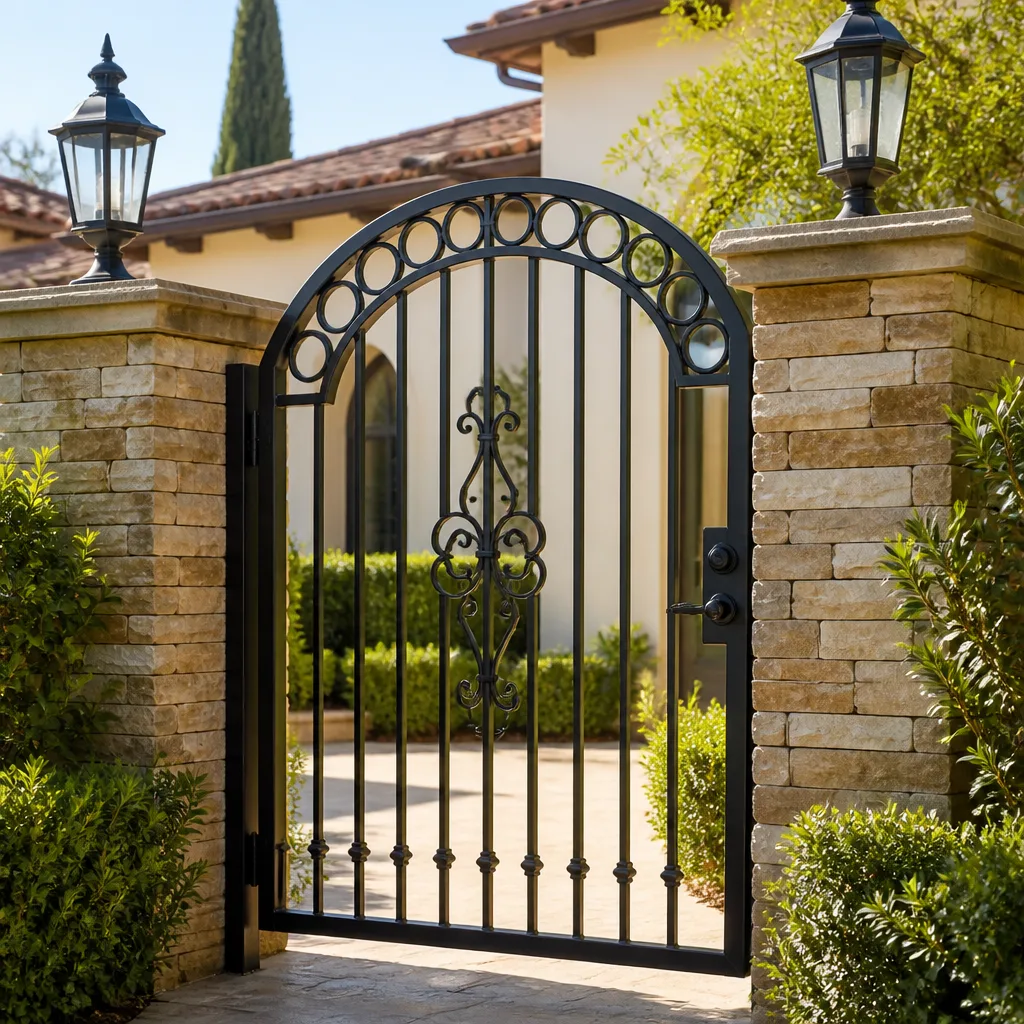 Wrought iron
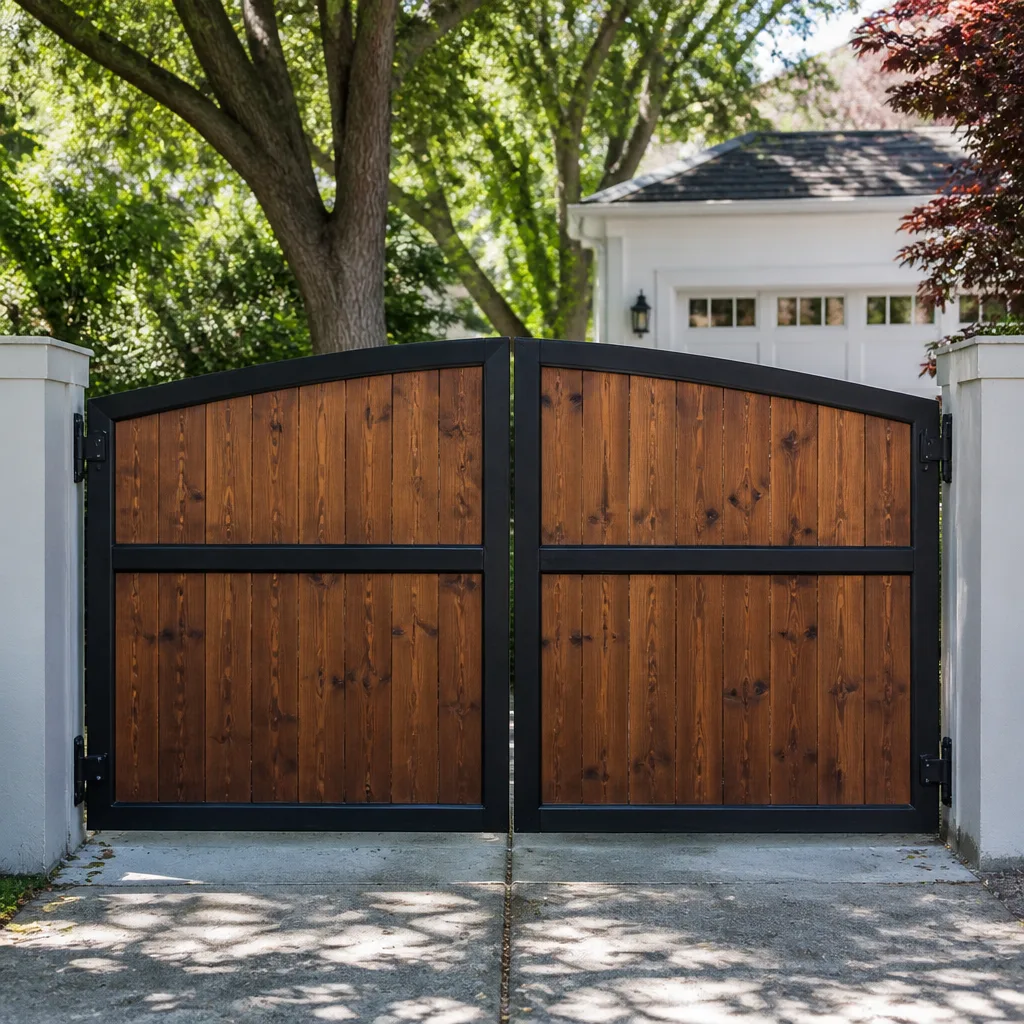 Wood & steel frame
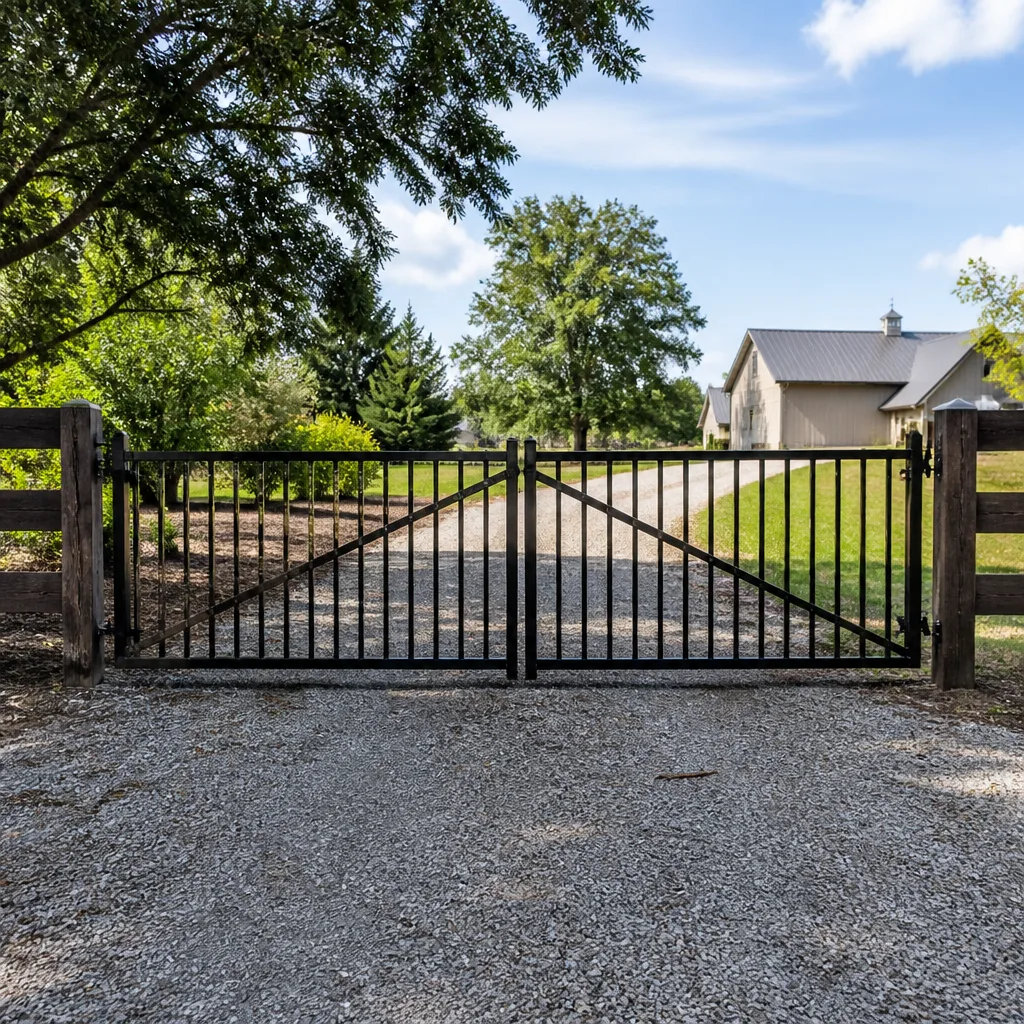 Farm & ranch
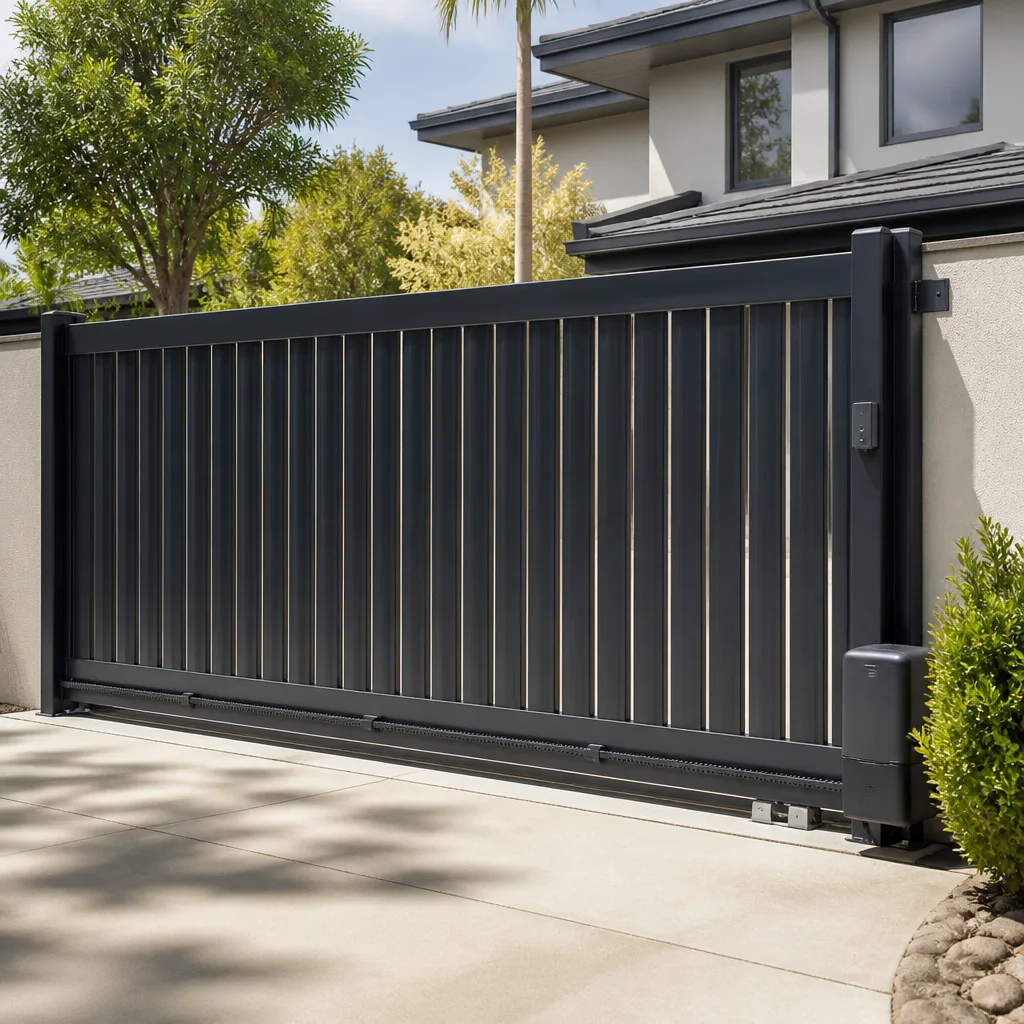 Sliding driveway gates
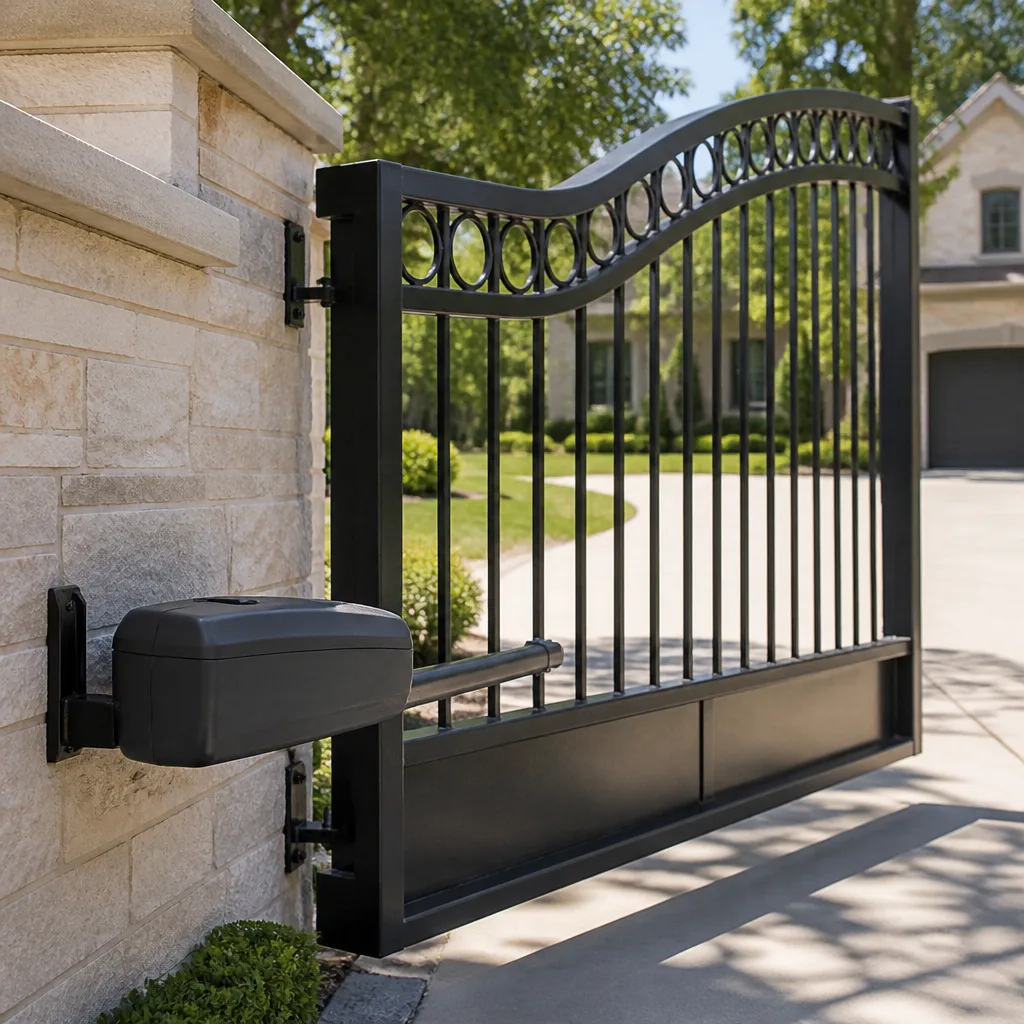 LiftMaster operators
Free on-site gate assessment - hinges, posts, and your LiftMaster or Nice gate operator checked before anything is quoted
The assessment is free and the quote is the invoice.
Get your free estimateDIY vs Professional Gate Repair: The Centennial Hills Homeowner’s Decision Guide
Replacing a gate hinge is a job plenty of homeowners handle well. Swapping a control board is not the same kind of job, even though both are “gate repair.” A hinge is mechanical and forgiving; a board is low-voltage electronics wired to a motor, and a single crossed wire can take out a motor on the first cycle. That line between the mechanical side and the electrical side is the real question behind DIY vs professional gate repair, and it’s the line this guide draws for you. By the end, you’ll know exactly which Centennial Hills gate repairs are safe to attempt and which ones you should hand to a technician.
Styles & brands we work with
- Wrought iron
- Wood & steel frame
- Farm & ranch
- Sliding driveway gates
- LiftMaster operators
Quick Answer
Mechanical gate repairs like hinge replacement, roller swapping, and limit switch adjustment are reasonable DIY projects for a careful homeowner. Anything touching the control board, the low-voltage wiring, or the access-control programming belongs with a trained technician, because a miswired circuit can destroy a motor and a voided warranty turns a small fix into a large bill. In Centennial Hills, we help homeowners sort their specific situation into one of those two buckets every week.
Table of Contents
- Where the Mechanical Side Ends and the Electrical Side Begins
- What a Confident Homeowner Can Safely Do
- What Requires a Technician
- Nevada Licensing Reality: What You Can Legally Do Yourself
- The Tools a Real Gate Diagnosis Needs
- The Hidden Cost of DIY Mistakes
- The Decision Flowchart: Route Your Own Repair
- Preventing the Next Breakdown at Your Centennial Hills Home
- Common Mistakes to Avoid
- When to Call a Professional
- Frequently Asked Questions
- The Bottom Line
Where the Mechanical Side Ends and the Electrical Side Begins
A gate system is really two systems bolted together. The mechanical side is everything you can see and touch: the gate leaf, hinges, rollers, tracks, latches, and the physical stop points. The electrical side is the motor, the control board, the low-voltage wiring, the photo-eye safety sensors, the loop detectors, and the access-control keypad or intercom. The two sides meet at the motor, and that meeting point is where most amateur repairs go wrong.
The reason the split matters isn’t that one side is “harder.” It’s that the two sides fail in completely different ways. A mechanical failure is usually gradual and visible, a hinge that sags or a roller that grinds. An electrical failure is often instant and invisible, a board that reads a bad signal and locks the gate mid-cycle. A homeowner with a decent socket set can replace a hinge and be done. But touching a board without understanding what it expects from each wire is where small repairs become expensive repairs.
In our experience working Centennial Hills gates, the safest way to think about it is this: if the part moves the gate or holds the gate, you can probably manage it. If the part tells the gate what to do, call a technician.
- Mechanical (usually DIY-friendly): hinges, rollers, tracks, latches, physical stops, manual release operation.
- Electrical (usually technician territory): motor, control board, low-voltage wiring, safety loops, access keypads, intercoms, photo-eyes.
- Gray zone: limit switch adjustment, battery and backup power, remote pairing.
That gray zone is worth a section of its own, and we get to it further down.
What a Confident Homeowner Can Safely Do
Some gate work genuinely rewards a careful homeowner. These are the tasks where a mistake shows up as a noisy gate or a gate that doesn’t close quite right, not a fried motor. If you’re mechanically inclined and you know your own limits, these are the jobs to keep on your list.
- Hinge replacement. A sagging gate leaf usually points to worn hinges. Replacing them is a matter of supporting the leaf, unbolting the old hinge, and bolting on one that matches the original thickness. Match the material and bolt pattern and you’ll fix the sag.
- Roller and track service. Rollers wear and tracks collect grit. Clean the track, replace any roller that spins roughly, and tighten the hardware. This is straightforward maintenance.
- Manual release operation. Every automated gate needs a manual release in case the power drops. Learn where yours is and practice using it while the gate is working normally. Knowing how to open the gate by hand is the single most useful skill a gate owner can have.
- Latch and stop adjustment. If the gate doesn’t sit flush against the post, walk the stops and the latch. Half of the “my gate won’t close” calls we get in Centennial Hills are a stop that drifted a quarter inch.
- Cleaning and lubrication. Wipe down the hinges, rollers, and track with a dry cloth, then lubricate the moving parts the manufacturer specifies. Skip the greasy spray that attracts grit.
Two precautions apply to all of the above. First, always disconnect power at the breaker before you touch anything near the motor, not just flip the remote. Second, never put any part of your body in the path of a gate that could move. A gate panel is heavy enough to crush. This is machinery, and it deserves the same respect as a garage door or a power tool.
If you’re unsure how to reach the manual release or where the electrical disconnect is, a quick call to a gate specialist can save you a lot of guesswork.
What Requires a Technician
These are the repairs where a mistake goes beyond inconvenience. Each involves parts that are either electrically sensitive, safety-critical, or legally restricted to licensed trades in many situations. In our experience, this is where Centennial Hills homeowners most often wish they’d called first.
- Control board replacement and diagnosis. A control board is the brain of the system. It reads signals from the safety sensors, the access keypad, the remote, and the limit switches, then decides how to run the motor. A replacement board has to be matched to the motor and programmed. Cross a wire and you can send voltage the wrong way and destroy the motor on the first cycle.
- Low-voltage wiring. Photo-eye beams, safety loops, and access-control signal wiring all run at low voltage, but low voltage is not “safe to improvise.” A miswired circuit can blow a fuse, brick a board, or create a phantom fault that shows up twice a week.
- Access-control programming. Keypads, intercoms, and entry management systems on Viking, Ghost Controls, DoorKing, and Elite hardware all have their own setup routines. Programming a keypad is fine for someone who knows the specific system, and a guessing game for someone who doesn’t.
- Motor replacement. Removing and refitting a gate motor means disconnecting wiring, re-rigging the arm or the track, setting the limits, and re-establishing the safety sensors. Fifty different things have to line up.
- Anything involving the main power feed. If the fault traces back to line voltage rather than low voltage, stop and call a licensed electrician. We say this on every page we write, and we mean it.
None of this is about gate work being mystical. It’s about the fact that the electrical side requires the right tools and the right knowledge, and neither is a shortcut you can skip. If you’re in Centennial Hills and you’re staring at a board or a wiring harness, this is the point to bring in a technician who works with your specific brand.
Nevada Licensing Reality: What You Can Legally Do Yourself
Nevada is a homeowner-friendly state for DIY work on your own residence, but “DIY-friendly” doesn’t mean “anything goes.” The line falls along the same electrical-mechanical split we’ve been describing all along. Mechanical work on your own gate is generally fair game for a homeowner. Anything beyond minor low-voltage work, and especially anything touching line voltage or requiring a permit, is where Nevada expects licensed trades.
A few realities to know before you pick up a screwdriver:
- Owner-builder rules: Nevada generally allows homeowners to do work on their own primary residence without a contractor’s license. That exception doesn’t apply to rental property, commercial property, or an HOA-owned common gate.
- Electrical work has a distinct license. Low-voltage access-control wiring and full line-voltage work are handled by different trades under Nevada rules. If the job crosses that line, a licensed electrician is the correct call.
- Permits: Some gate installations and most structural changes require a permit through the city or the county. Ask the building department before you build, not after.
- Warranty terms: Your gate manufacturer’s warranty has its own rules. Many exclude damage caused by work done by anyone other than an authorized technician, so check your documentation before you touch anything electrical.
We’re not your lawyer and this isn’t legal advice. If a job is unclear, the safe move in Centennial Hills is to ask the building department and ask your manufacturer before you start. When neighbors or HOA boards ask us how they should interpret the licensing question, we tell them the same thing.
A note on our own licensing: we connect Centennial Hills homeowners with independent local gate professionals, and those technicians are licensed and insured as Nevada requires. That’s the standard to look for in anyone you hire.
The Tools a Real Gate Diagnosis Needs
Here’s where DIY gate repair advice from a video falls apart. A multimeter will tell you whether a circuit has voltage, and that’s about it. A real gate diagnosis is a signal-tracing job, and the tools that do it are specific to the trade. This is why even a competent electrician who has never worked on gates can struggle, and why a gate-only specialist who works on your brand every week gets to the answer fast.
A proper diagnostic toolkit includes:
- A loop detector tester. Safety loops buried under the driveway signal the gate to stop when a car is over them. Testing a loop with a multimeter tells you almost nothing about whether it’s sending a clean signal. A loop tester reads what the board actually receives.
- A clamp meter. This measures current through a wire without breaking the circuit. On a gate, it tells you whether the motor is drawing what it should or whether it’s straining against a mechanical fault.
- The manufacturer’s programming interface. Boards from Viking, DoorKing, Elite, and similar brands speak their own language. Programming access and reading fault codes takes the manufacturer’s tool or a handset, not a guess.
- The correct fuse set and spare parts. A technician arrives with the right fuses and the small components that fail alongside a board, so a repair doesn’t stall mid-job.
- Brand-specific documentation. Wiring diagrams, dip-switch charts, and fault tables vary dramatically from one brand to the next.
A multimeter alone leads to a very specific kind of misdiagnosis: the homeowner reads voltage where they expect it, assumes the board is fine, replaces the motor, and finds the same fault. In our experience, that loop of replaced parts is the most expensive form of DIY. If you want a technician to diagnose the actual fault in your Centennial Hills gate, gate repair is the service that covers this.
The Hidden Cost of DIY Mistakes
The visible cost of a DIY mistake is the part you broke. The hidden cost is bigger. It’s the warranty you voided, the board you zapped with static electricity, and the access system you miswired so badly that the only fix is a full board replacement. Homeowners usually find these costs on the back end, once a technician is already on-site and the damage is clear.
Three mistakes account for most of the expensive DIY outcomes we see:
- Electrostatic discharge (ESD) killing a board. Integrated circuits are sensitive to static. Touching a control board without grounding yourself can destroy it silently. The board looks fine; the gate won’t run. A replacement board isn’t cheap.
- Voided warranty. Most gate manufacturers exclude damage caused by unauthorized work. A quick DIY that fails can end up voiding coverage on a motor that was still under warranty.
- Miswired access control. A keypad or intercom wired to the wrong terminals can short the control board. What should have been a programming tweak turns into a full board swap plus a new access system.
There’s also a fourth cost that doesn’t show up on an invoice: time. A homeowner who spends a Saturday chasing a fault that turns out to be two doors from the board loses a weekend and the part cost. The math on calling a technician first is usually favorable when the fault is on the electrical side.
When the time comes to replace hardware rather than chase a fault, gate installation covers that path with the same careful diagnosis.
The Decision Flowchart: Route Your Own Repair
Use this sequence of yes/no questions to sort your specific situation. If any answer is unclear, treat that as “call a technician.” A technician can explain what they see in ten minutes and save you hours.
- Is the fault mechanical? Look at the hinges, rollers, track, and stops. If the gate sags, grinds, or won’t latch, you’re probably on the DIY path. If the gate is electrically dead or misbehaving, continue.
- Does the remote work? If the remote triggers the gate but the gate stops halfway, that’s usually a safety sensor or limit issue. If the gate does nothing, the fault is likely in the motor, board, or power. Continue.
- Does the gate move manually? Disconnect power, use the manual release, and try to swing or slide the gate by hand. If it moves freely, the fault is electrical. If it’s stuck, the fault is mechanical. Mechanical faults are usually safer for DIY, but stop if the gate is heavy enough to be dangerous on its own.
- Is there a safety sensor involved? A photo-eye or loop detector fault almost always touches low-voltage wiring. Do not attempt to bypass a safety sensor. A gate that closes on a person or a car is a serious hazard. Call a technician.
- Is the control board or access keypad involved? If your diagnosis points anywhere near the board, the keypad, or the intercom, call. This is the line.
- Are you in over your head? Be honest. If you’ve never worked on low-voltage wiring, or you don’t own the right tools, the answer isn’t “try anyway.” It’s “call.”
That second file applies here: our process is always to repair what you have before we recommend replacing it. So if you call us to diagnose a Centennial Hills gate, we won’t sell you a new motor you don’t need. We work on Viking, Ghost Controls, DoorKing, and Elite systems specifically, which means the right parts knowledge is already in the house.
If the diagnostic path leads to a motor or opener replacement, gate motor & opener is the service that covers it.
Preventing the Next Breakdown at Your Centennial Hills Home
The best gate repair is the one you don’t need. A little routine attention goes a long way, especially in Centennial Hills, where the desert dust settles into every track and hinge and the summer sun bakes the hardware all season. The neighborhoods around Centennial Hills Park see their share of dusty gates, and the homes closer to the foothills deal with wind-blown grit that gets into rollers and tracks in a hurry.
A simple quarterly routine that keeps a gate out of the shop:
- Wipe tracks and rollers dry. A cloth and a few minutes prevents most roller failures.
- Lubricate the moving parts the manufacturer specifies. Not everything, and not with grease that attracts dust.
- Walk the safety sensors. Clear the photo-eye lenses and check that the gate reverses when something interrupts the beam.
- Test the manual release. Once a season is enough, and it’s the check you’ll be glad you did on the day the power goes out.
- Watch for new sounds. A gate that starts to groan or ticks is telling you something. Address it early and it stays a small repair.
If you’d rather have a technician walk the system and catch what a homeowner tends to miss, that’s a normal service call. We check the mechanical parts, test the electrical side, and give you a written report. The estimate is free, and the price is set before any work begins.
Common Mistakes to Avoid
- Touching a control board without grounding. Static electricity can destroy a board in an instant, and the damage is invisible. Ground yourself to the chassis before any board work, or better yet, hand the board to a technician. This is the single most expensive DIY mistake we see on Centennial Hills gates.
- Bypassing a safety photo-eye. A gate with a defeated safety sensor is a hazard to kids, pets, and cars. Never tape over or jumper out a safety sensor. Call a technician instead.
- Mixing brands when replacing parts. A Viking hinge is not a DoorKing hinge, and a Ghost Controls receiver is not compatible with an Elite board. Match the part to the brand printed on your system before you order.
- Adjusting the limit switch by trial and error. Limit switches tell the gate where to stop, and a wrong setting can drive the gate into a wall or stall the motor. If you attempt it, watch the gate through a full cycle before you leave the gate unattended, and stop if anything binds.
- Ignoring the manual release. The one skill every gate owner should have is opening the gate by hand when power is out. Practice it while the gate is working. Don’t wait for the night it matters.
- Replacing a motor before diagnosing the fault. A dead gate is usually a sensor fault, a fuse, or a wiring issue, not a bad motor. Replacing the motor without a diagnosis often reproduces the same fault with a new motor installed.
- Over-greasing the track. Grease plus desert dust equals grinding paste. In Centennial Hills, dry lubricant is usually the right call over a heavy grease that collects grit.
When to Call a Professional
Call a technician when the fault is on the electrical side, when safety sensors are involved, when access control needs programming, or when your diagnosis keeps pointing back to the control board. Call when the gate is heavy enough that a manual release is genuinely dangerous without help. Call when you’re not sure, because a technician can tell you in minutes what a homeowner might struggle with for hours.
Gate Repair Centennial Hills offers free estimates in Centennial Hills. Call (877) 745-4728. We answer 24/7. Fast dispatch from 7am to 7pm, Sunday through Friday. Our technicians have up to 9 years of experience, and gates are the only work we do. That focus matters when you’re deciding whether to trust a specialist or a generalist: we work on the electrical and the mechanical side every day, and we repair what you have before we recommend replacing it.
For more on how the full service breaks down, the main Gate Repair Centennial Hills page covers the whole scope. The estimate is free, and the price is quoted and agreed before any work starts.
Frequently Asked Questions
Yes, replacing a hinge is a reasonable DIY repair for a mechanically confident homeowner. Support the gate leaf, unbolt the old hinge, and fit one that matches the original thickness and bolt pattern. Prevent the gate from swinging freely while you work, and never place any part of your body under a gate that could move.
In many cases, yes, for work on your own primary residence, but electrical work has its own set of rules. Nevada generally allows owner-builder work on a primary home, while low-voltage access-control wiring and line-voltage work are usually best handled by a licensed trade. Ask the city or county building department and check your manufacturer’s warranty before you start. Call (877) 745-4728 if you want a technician to assess the job.
Mechanical repairs involve the parts that move or hold the gate: hinges, rollers, tracks, latches, and stops. Electrical repairs involve the parts that control the gate: the motor, the control board, the low-voltage wiring, the safety sensors, and the access-control keypad. The mechanical side is usually DIY-friendly; the electrical side usually isn’t.
Often yes. Many gate manufacturers exclude damage caused by unauthorized work, and that exclusion can extend to the motor if a board failure takes the motor with it. Check your manufacturer’s documentation before any electrical work, and when in doubt, let a technician handle the board or the wiring.
A proper gate diagnostic includes a loop detector tester, a clamp meter, and the manufacturer’s programming interface for the specific brand, along with the correct fuse set and spare parts. A multimeter alone is not enough, and that gap is a common reason DIY diagnostics stall or reach the wrong conclusion.
Repair is usually the right call when the gate structure is sound and the fault is isolated. Replacement makes sense when the frame is rusty or damaged beyond reasonable repair, or when the motor and controls are several generations behind current hardware. A technician can inspect the gate and give you a written estimate either way, and there’s no charge for that visit.
When the fault points at the control board, the low-voltage wiring, the safety sensors, the access-control keypad, or the motor, it’s beyond a safe DIY repair. When you’re not sure whether it’s mechanical or electrical, that uncertainty is the signal to call. We answer 24/7, and a fast diagnosis usually costs less than the parts you’d swap trying to find the fault yourself.
The Bottom Line
The DIY vs professional gate repair decision falls along a clear line: mechanical work is fair game, electrical work belongs with a technician. Hinges, rollers, tracks, latches, and manual release operation are reasonable projects for a careful homeowner. The control board, motor, low-voltage wiring, safety sensors, and access-control programming are not, because the tools and the stakes are different. In Centennial Hills, we help homeowners sort every job into those buckets, and we repair what you have before we recommend replacing it. When the fault crosses to the electrical side, call (877) 745-4728. We answer 24/7. Fast dispatch from 7am to 7pm, Sunday through Friday. Free estimates, and the price is agreed before any work starts.
Written by the team at Gate Repair Centennial Hills.
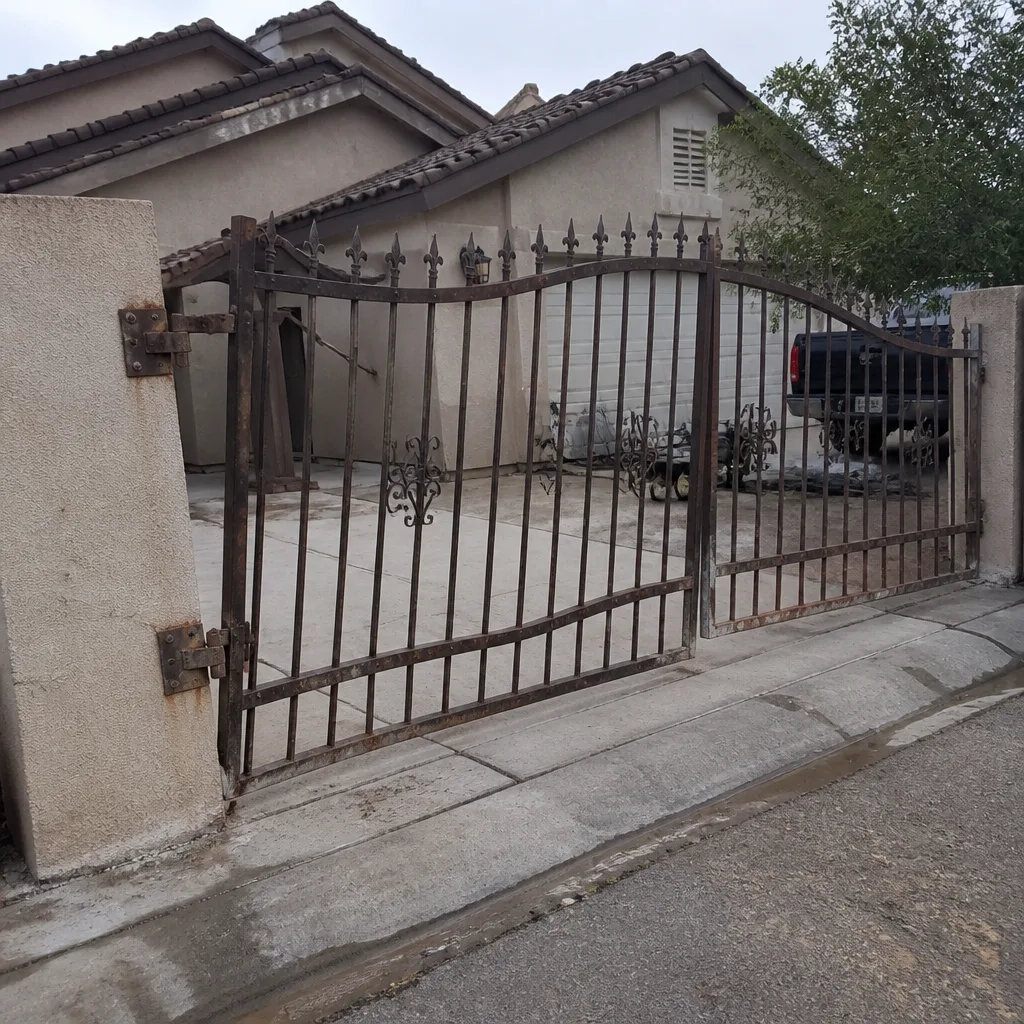
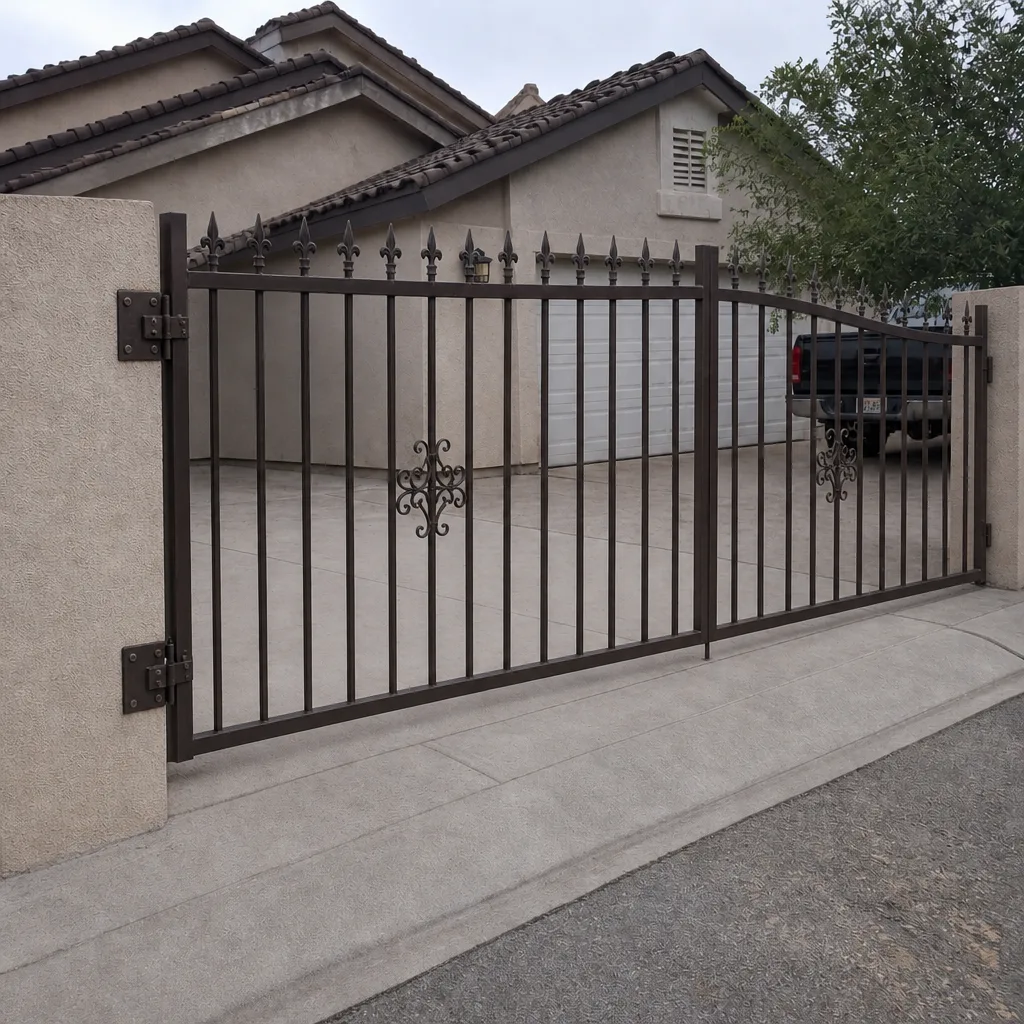
See the difference
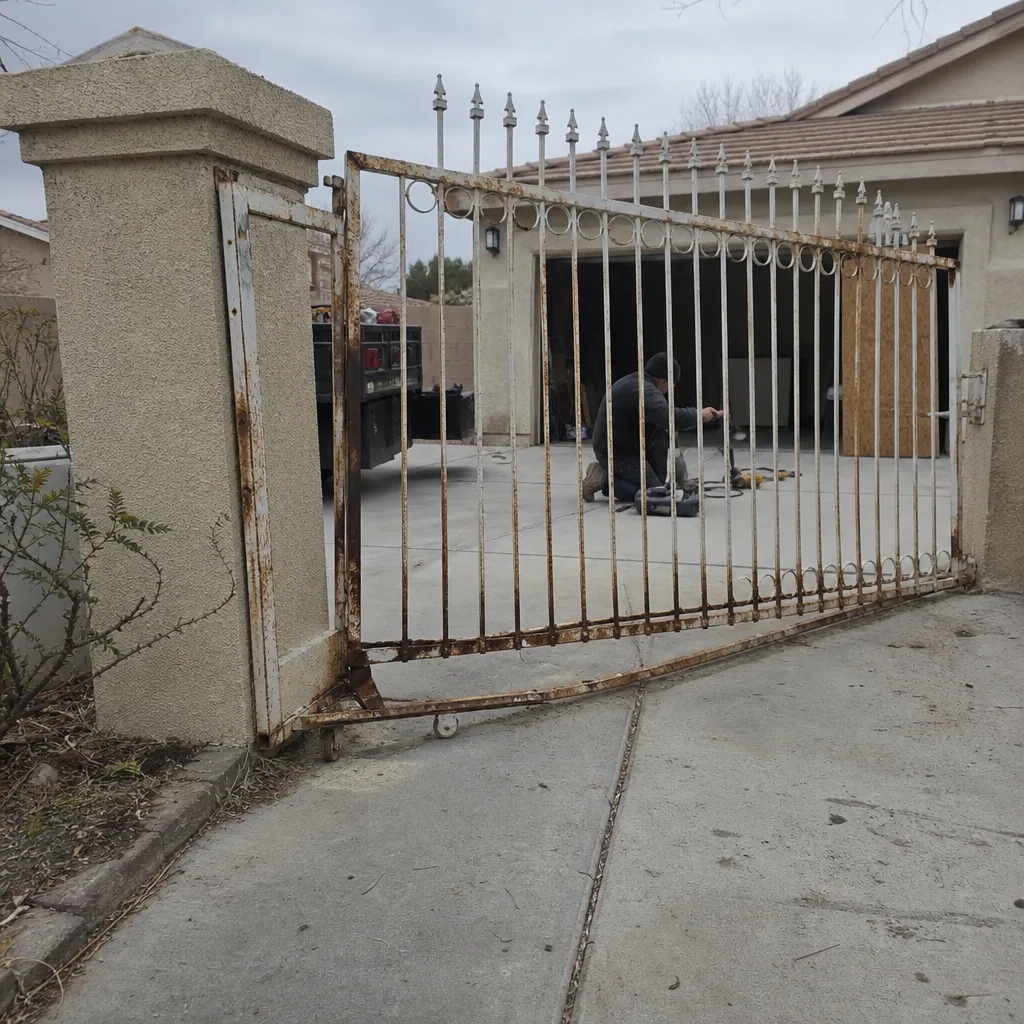 Before
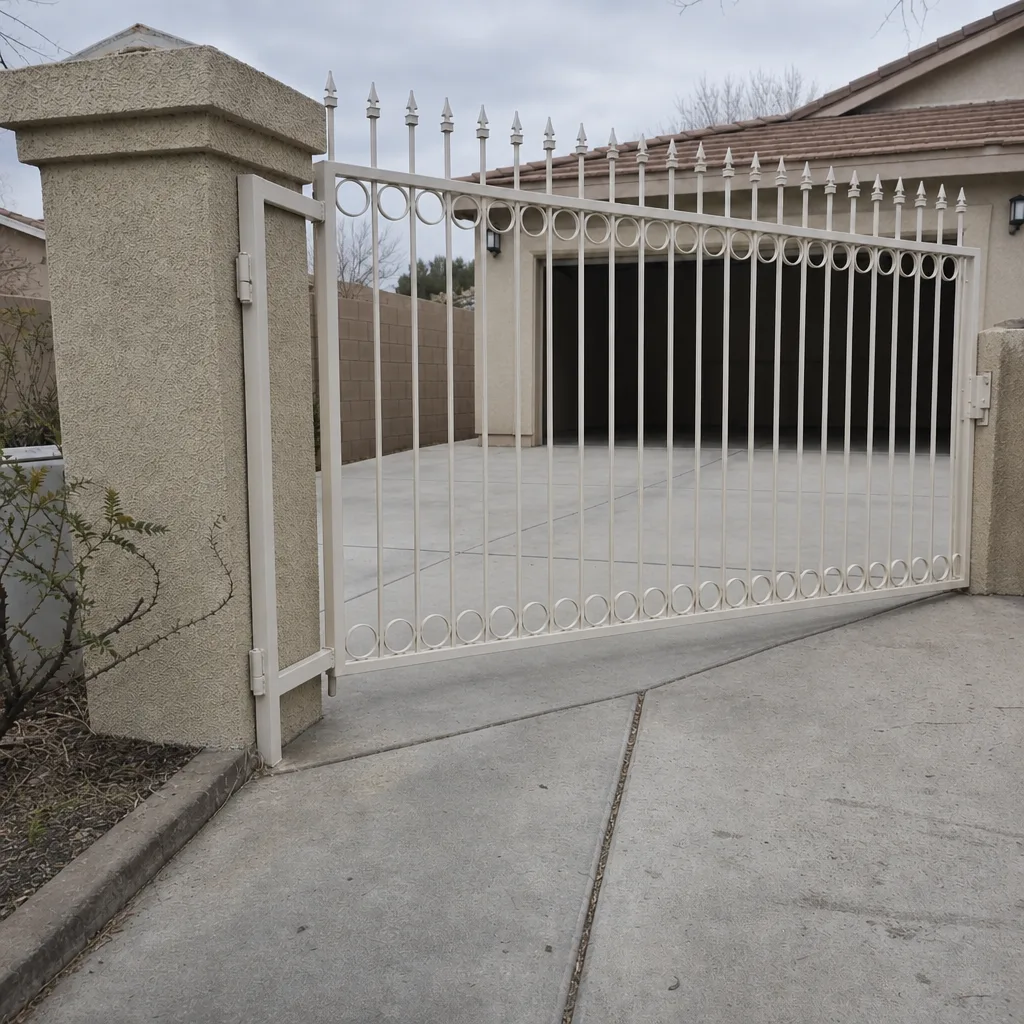 After
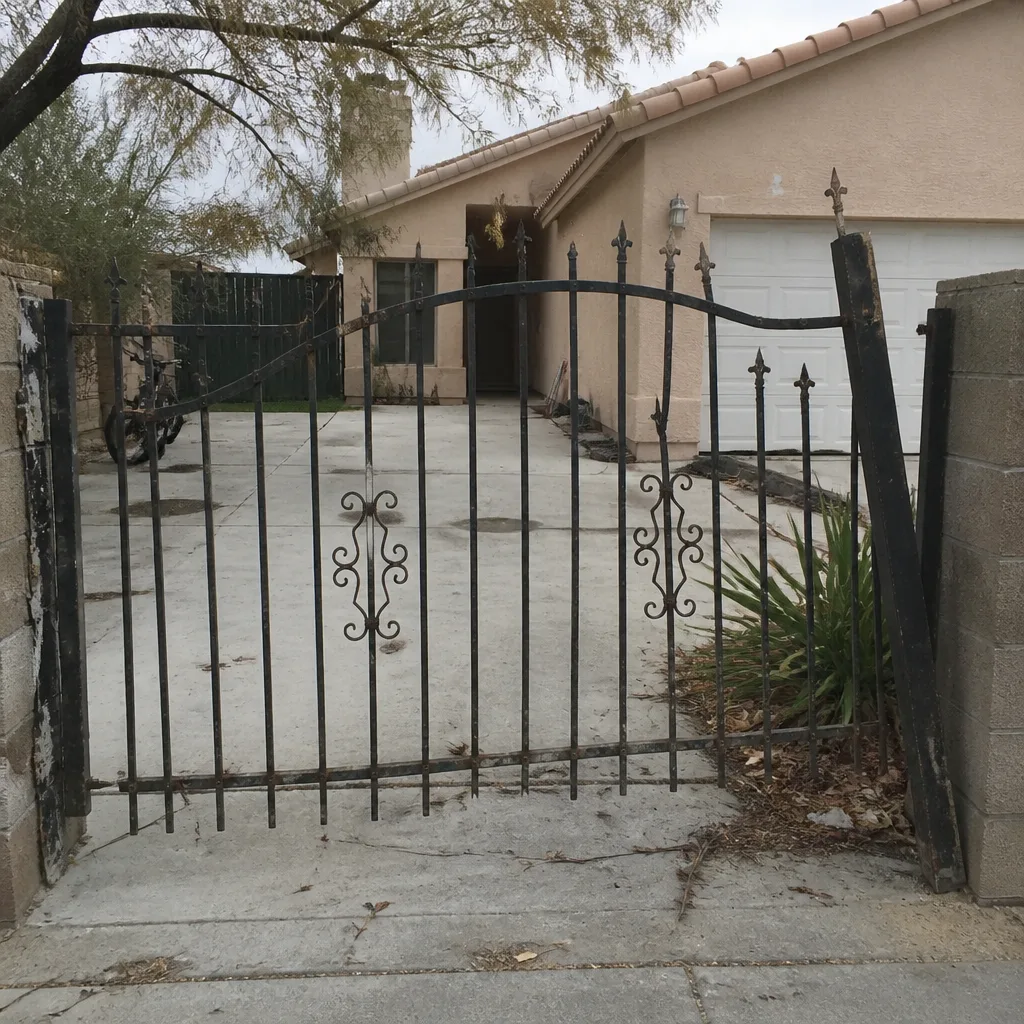 Before
 After
 Before
 After