
Last updated November 24, 2026
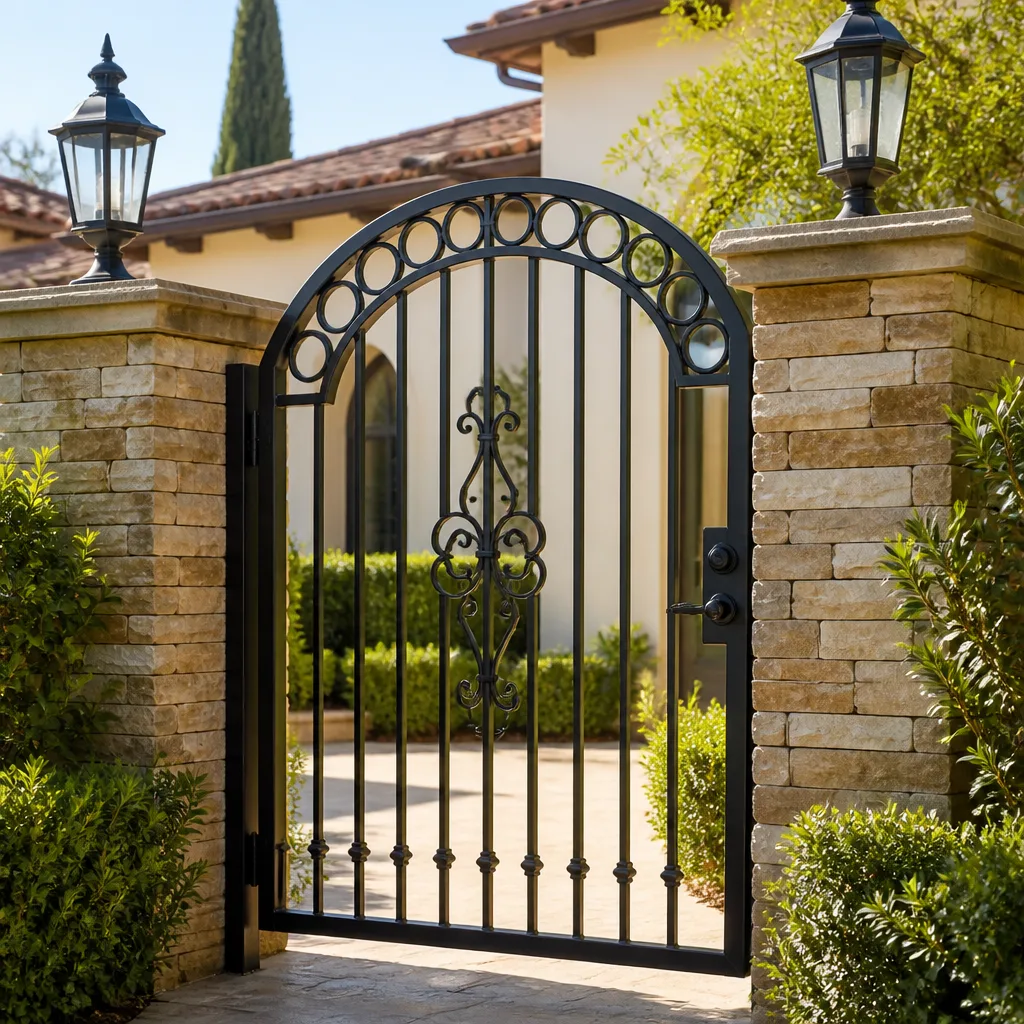 Wrought iron
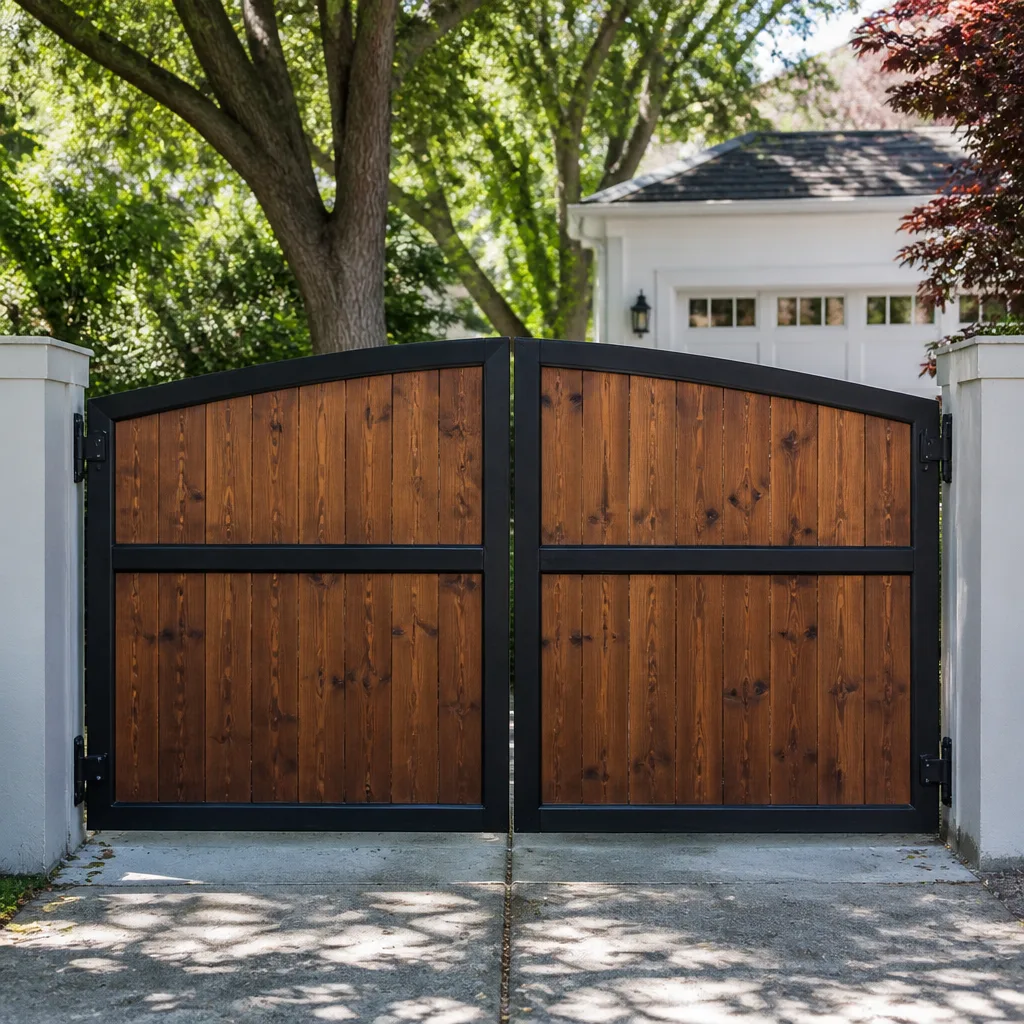 Wood & steel frame
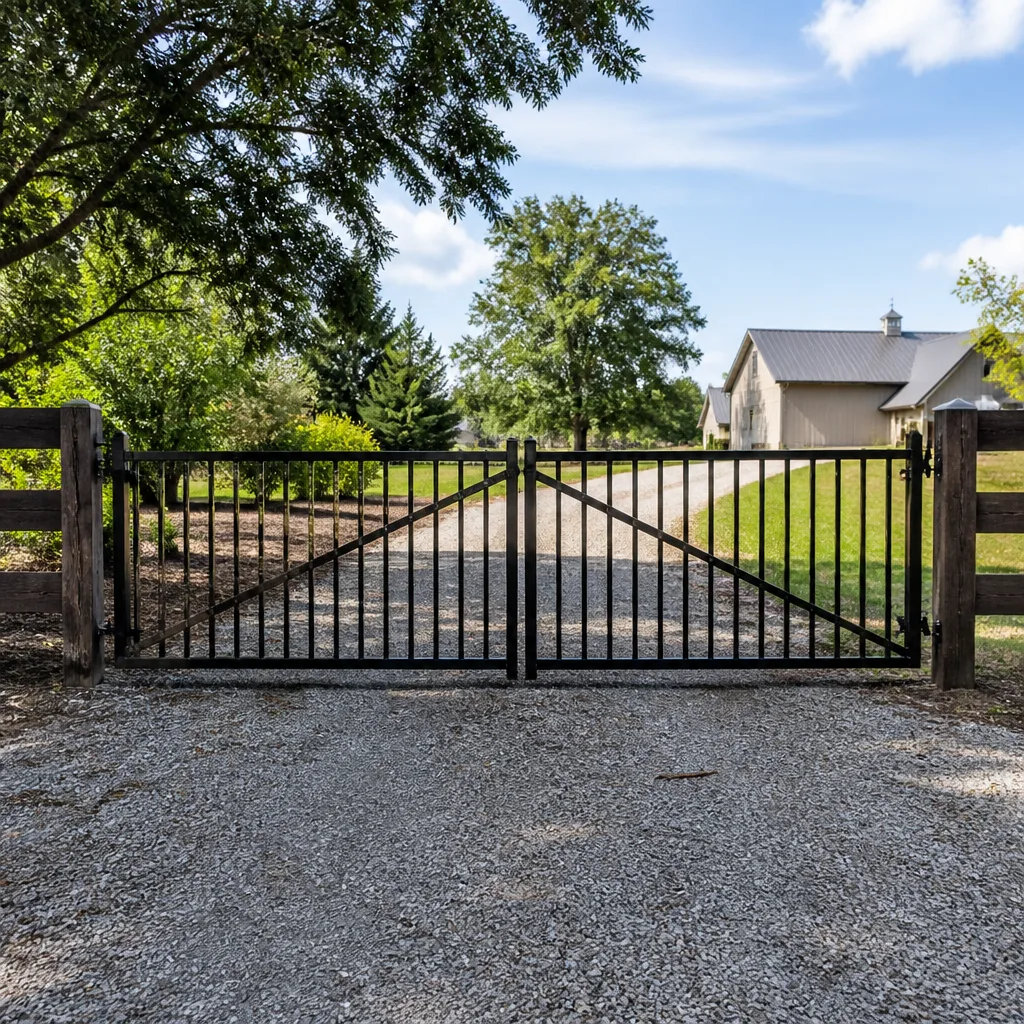 Farm & ranch
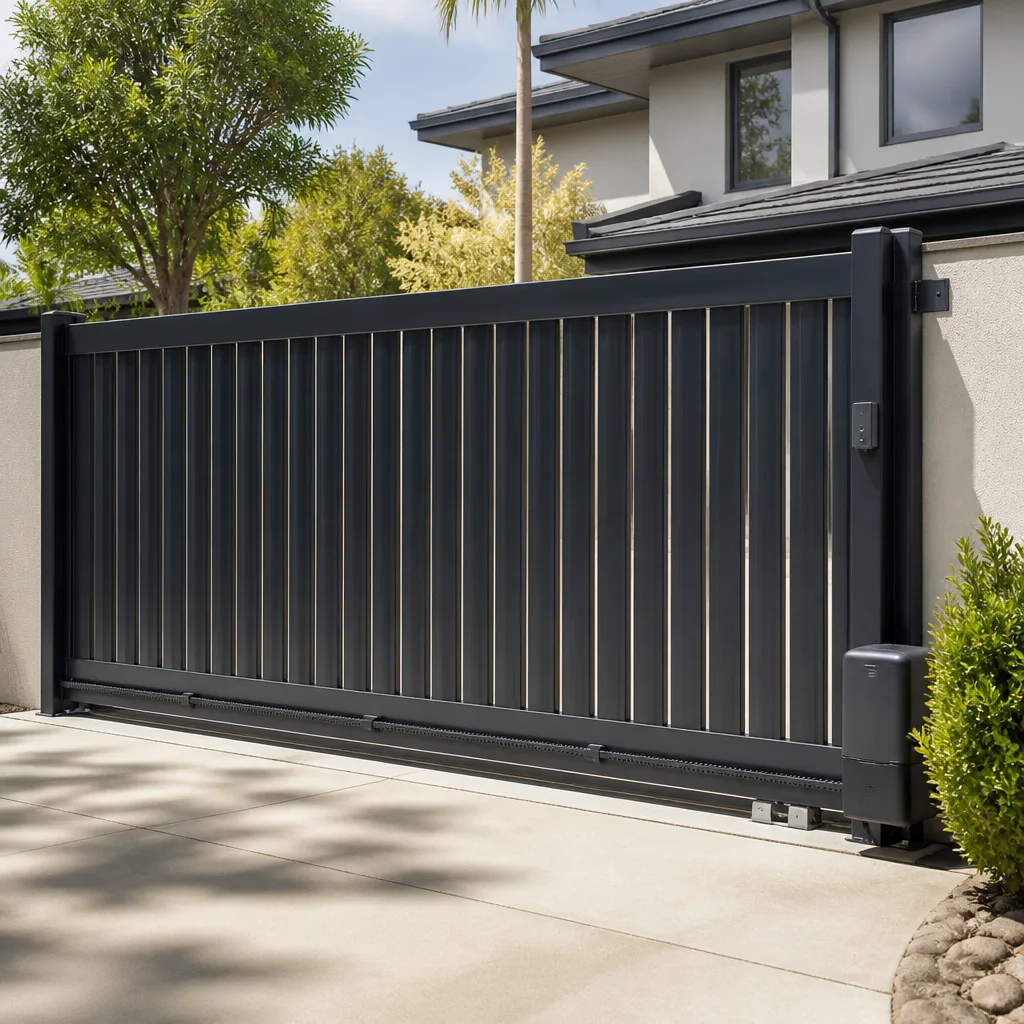 Sliding driveway gates
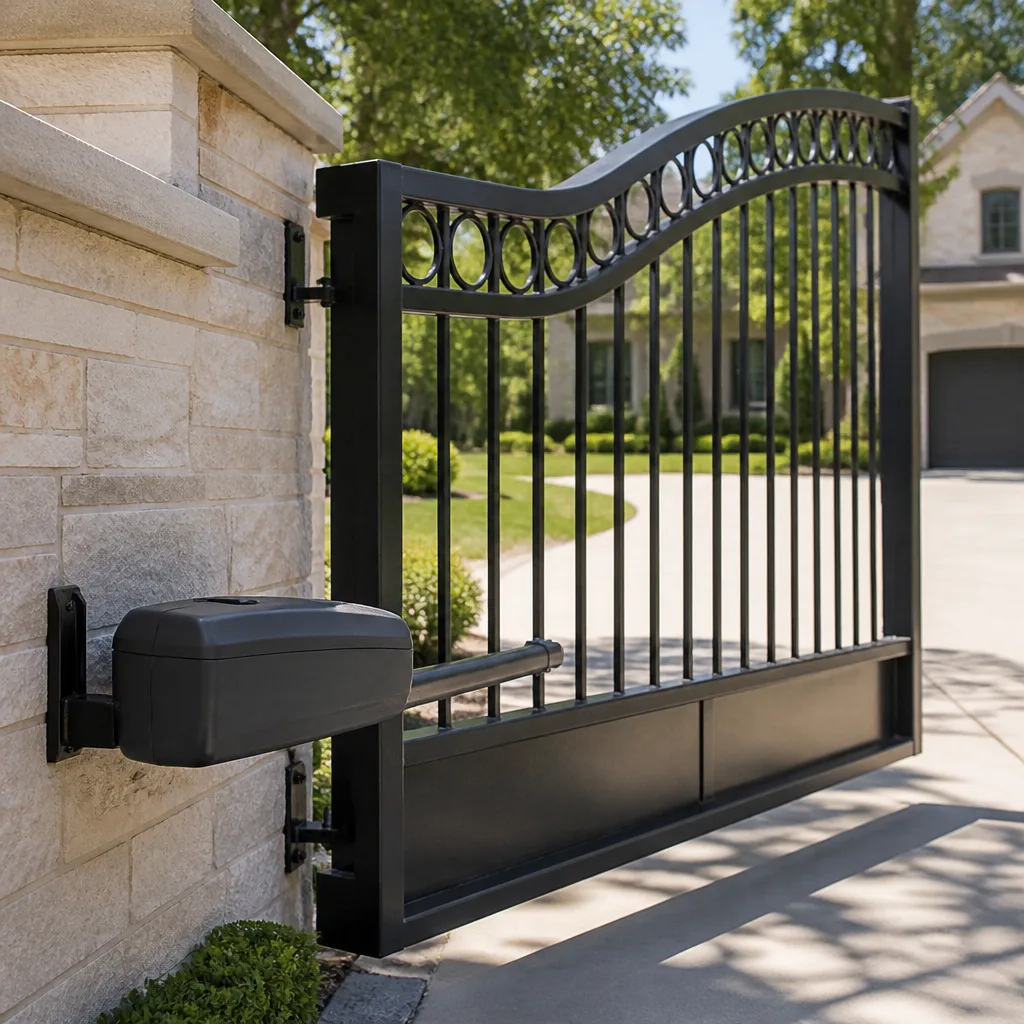 LiftMaster operators
Free on-site gate assessment - hinges, posts, and your LiftMaster or Nice gate operator checked before anything is quoted
The assessment is free and the quote is the invoice.
Get your free estimateThe Complete Guide to Gate Repair in Centennial Hills
Most gate failures in Centennial Hills aren’t mysteries. They’re predictable. The heat, the soil, the dust, the electronics inside the control box that have never been updated since the day they were installed. What surprises homeowners is how often a gate gets “fixed” and then fails again a few weeks later. The gate didn’t fail twice. The first repair just never addressed why it broke in the first place. This guide walks you through the three root causes that account for most automatic gate problems here, how to tell a motor issue from a control board issue before anyone touches your gate, and how to decide whether a repair is worth doing or whether replacement makes more sense. By the end, you’ll know what you’re actually dealing with.
Quick Answer
Gate repair in Centennial Hills usually comes down to one of three root causes: motor overload from sustained high heat, corrosion of buried hardware from alkaline soil, or access control firmware that was never updated. Identifying which category your gate falls into determines whether you need a part replaced, wiring corrected, or a system reprogrammed. Most “repeat failures” we see are gates where the symptom was fixed but the root cause wasn’t.
Styles & brands we work with
- Wrought iron
- Wood & steel frame
- Farm & ranch
- Sliding driveway gates
- LiftMaster operators
Table of Contents
- The Three Root Causes Behind Most Gate Failures in Centennial Hills
- How Centennial Hills Climate Accelerates Gate Wear
- Electrical vs. Mechanical: Diagnosing the Problem Before Anyone Touches Your Gate
- Brand-Specific Failure Patterns for Common Gate Openers
- HOA and Permitting Rules That Affect Gate Repair in Centennial Hills
- Repair or Replace? A Cost-to-Value Framework
- How a Typical Gate Repair Visit Works
- Common Mistakes to Avoid
The Three Root Causes Behind Most Gate Failures in Centennial Hills
Before we get into symptoms, we need to talk about causes. When a gate stops opening, most people focus on the part that visibly broke. A stripped gear. A dead motor. A control board with a burned-out relay. But those parts don’t usually fail on their own. Something upstream caused them to fail. In our experience working on gate repair in Centennial Hills, the same three causes show up again and again.
1. Motor Overload from Desert Heat
Centennial Hills summers push past 110°F regularly. Gate motors sit inside metal or plastic housings mounted to a metal post in direct sun. On a day when the air is 110°F, the inside of that housing can get significantly hotter. Motors are rated for a certain ambient temperature, and once the internal temperature climbs past that threshold, the thermal protection kicks in and shuts the motor down. Repeat that stress day after day, season after season, and the motor windings and capacitors degrade faster than they would in a milder climate. A motor that would last a decade elsewhere can start dragging and overheating here much sooner.
What makes this tricky is that a heat-stressed motor doesn’t always fail outright. It runs slow, draws more current, and stresses the control board. So the repair looks like a board replacement, when the real problem is the motor raising the electrical draw on everything downstream.
2. Alkaline Soil Corrosion on Buried Hardware
Caliche soil is common throughout this part of the valley, and it’s alkaline. Any component in contact with the ground – gate post footings, buried conduit for power and low-voltage control wiring, anchor plates – is exposed to a chemical environment that accelerates rust. Corroded anchor plates weaken the mounting. Corroded conduit can crack and let moisture and grit into wiring runs. When a sliding gate starts to bind or a swing gate sags at the end of its run, the problem is often in the footing and mounting hardware rather than in the operator itself.
3. Access Board Firmware That Never Got Updated
Modern gate entry systems include logic boards and access control boards with firmware. Firmware updates fix bugs, patch security issues, and improve timing logic for openers, safety edges, and keypad systems. Many gate systems installed five, ten, or fifteen years ago have never had a firmware update applied. That old firmware can cause erratic behavior – phantom openings, missed remote commands, keypad codes that don’t register – that looks like a hardware failure but isn’t. If you’re calling a technician every few months for “gate randomly opening” or “remote doesn’t work,” check the firmware version before anything else.
How Centennial Hills Climate Accelerates Gate Wear
You can’t talk about gate repair in Centennial Hills without talking about the environment. This isn’t coastal weather with salt air or a rainy season that breeds rot. It’s dry, hot, dusty, and alkaline. Each of those conditions hits a different part of your gate system in a different way.
Heat and the Motor Enclosure
A swing-arm or slide-gate motor works by generating torque and dissipating the waste heat through its housing and gear case. In sustained triple-digit heat, that dissipation is slower. Thermal protection triggers more often. Thermal cycling – heating up, shutting down, cooling off, starting again – stresses the solder joints on the control board and the brushes inside the motor. Over years, those cycles cause failures that have nothing to do with how often you use the gate.
Dust Intrusion in Slide Rails and Gear Trains
Centennial Hills sits at the edge of the desert where spring wind events push fine dust through the air for days at a stretch. That dust enters chain tracks, gear housings, and the gap between a sliding gate panel and its post. Grease that’s meant to protect moving parts becomes a dust magnet. The result is premature wear in the gear train, binding in the track, and greater strain on the motor. Any gate repair plan for Centennial Hills needs to include regular track and gear cleaning, not just lubrication.
Caliche Soil and Post Integrity
Caliche is a hard, cemented layer of calcium carbonate found throughout the southwest. It’s tough to dig through when a gate post is being set, and it stays alkaline for decades. If your gate posts were installed with standard galvanized hardware, that hardware is slowly being eaten by the soil chemistry. When a swing gate starts to drift off its hinge axis or a slide gate falls out of alignment, the posts and footings should be checked before anything else is adjusted. Hardware in contact with this soil needs to be inspected on a routine basis.
UV Degradation on Plastic and Rubber Components
Intense sun shortens the life of safety-edge rubber, loop sealants, plastic housing covers, and the insulation on exposed low-voltage wiring. Cracking in these components leads to electrical shorts, sensor failures, and water intrusion during rare storms. If you see cracking on your safety edge or exposed wire insulation, that’s a gate repair waiting to happen.
Electrical vs. Mechanical: Diagnosing the Problem Before Anyone Touches Your Gate
The single most useful skill a gate owner can develop is learning to describe the problem accurately. Is the gate not moving at all, moving slowly, moving partially, or moving and then reversing? Each of those points to a different category of fault. This step-by-step process helps you narrow down what kind of problem you’re dealing with before a technician arrives – which means a faster diagnosis and a more accurate estimate.
- Does the gate respond at all to the remote or keypad? If there’s no motor sound and no movement, you’re likely looking at an electrical issue: power supply, control board, or access device. If the motor runs but the gate doesn’t move, that’s mechanical or drive-related.
- Does the motor run but the gate barely moves or moves in one direction only? That points to a drive component – a stripped gear, a slipping clutch, a broken chain or arm, or binding in the track or hinges.
- Does the gate move and then reverse before it closes? That’s almost always a safety device issue. Safety edges, photo-eyes, or loop detectors are triggering.
- Is the gate opening on its own at random times? That’s an access control or control board problem – a stuck relay, a failing receiver, or stale firmware causing phantom commands.
- Is the motor hot to the touch and shutting down after a few cycles? That’s thermal protection, likely caused by an overheated motor, a dragging gate, or a failing capacitor increasing the current draw.
- Does the keypad or intercom work intermittently? That points to low-voltage wiring, a power supply issue at the access board, or a failing keypad unit.
Being able to answer these six questions before a technician arrives is genuinely useful. It narrows the diagnostic window and keeps the visit focused. Every gate service we do starts with this same kind of evaluation because we repair what you have before we recommend replacing it – and we can’t do that accurately if we don’t know which subsystem is failing.
Brand-Specific Failure Patterns for Common Gate Openers
We work with the major gate operators routinely, and each brand has its own weak points. Knowing them means the right part gets ordered and the repair gets done in fewer visits. Call it brand-fluent diagnostics. Here are patterns we see with the systems common in Centennial Hills.
DoorKing
DoorKing systems are built heavily and last well, but their access control boards in commercial and HOA applications accumulate firmware issues if they’re never updated. Keypad and intercom failures on DoorKing systems often trace back to the access board rather than to the keypad itself. We work on DoorKing systems specifically and check the board and firmware first.
Linear
Linear slide-gate operators are common on residential properties, and the failure pattern here tends to center on the drive chain and gear train – particularly in dusty conditions where chain wear accelerates. Limit switches on Linear units also go out of adjustment over time, causing the gate to overrun its open or close position.
Viking
Viking swing operators are solid performers, but the clutch assembly and the control board’s power regulation are the common failure points. If a Viking gate stops responding and the motor itself tests fine, the control board is usually the culprit.
Ghost Controls
Ghost Controls systems are popular on residential swing gates and are user-programmable, which is both a strength and a vulnerability. Misconfigured settings – especially safety-device configuration – cause most “gate won’t close” calls we see on Ghost Controls units. A careful reprogramming often solves the problem without any parts.
For other major brands – LiftMaster, FAAC, BFT, Elite, Mighty Mule – the diagnostic approach is the same. We work on the equipment that’s already installed rather than steering every call toward replacement. For gate motor and opener service across all these brands, that’s the standard we hold to.
HOA and Permitting Rules That Affect Gate Repair in Centennial Hills
Many homes in Centennial Hills sit inside HOA-governed communities, and that adds a layer most gate repair guides ignore. Before certain repairs can be done, some HOAs want to review the work. Before certain replacements, the city may want a permit. Knowing which approvals apply to your job saves time and prevents a repair from being redone.
- Like-for-like repairs (a motor swap, a board replacement, a hinge repair) usually don’t require a permit or HOA approval – but some HOAs want notification. Check your governing documents before scheduling.
- Full gate replacement or a new installation frequently requires a permit from the city, and HOA architectural review is often required for any change to the gate’s appearance, height, or hardware style.
- Access control changes that alter how entry works – adding a keypad, changing to a different remote system, adding an intercom – may be governed by HOA rules on common-area or shared-access equipment.
- Safety-edge changes should always be matched to the current gate and operator, even when the HOA has no specific rule, because the safety direction of the gate depends on it.
- Electrical work that involves new wiring runs or new power to a gate operator typically needs a licensed electrician and sometimes a permit – ask your city’s building department what applies to your job.
For HOA-governed properties, the cleanest path is to get the written rules before a technician arrives. We can plan around HOA requirements, but we can’t waive them. A free on-site estimate is the right time to talk through the HOA constraints before anyone commits to a repair. If you’re planning a full install rather than a repair, that’s a separate conversation – gate installation has its own permitting and design steps, and a written estimate is the right starting point.
Repair or Replace? A Cost-to-Value Framework
Not every gate can be repaired economically. And a repair that buys six months isn’t a repair – it’s a delay. Here’s the framework we use to make the call.
Signs a repair is worth doing
- The gate and posts are structurally sound and the framing isn’t rusted through.
- The problem traces to a specific, replaceable component – motor, board, safety edge, keypad, gear, or hinge.
- The operator is a brand we can still get parts for.
- The fix is mechanical or electrical rather than a whole-system failure.
- The repair restores the original function and doesn’t just mask a symptom.
Signs it’s time to replace
- Multiple subsystems have failed at once – motor, board, and wiring all problematic.
- The gate has been repaired repeatedly for the same issue and the root cause is structural.
- The posts or footings are compromised by soil corrosion and the gate can’t hold alignment.
- The operator is obsolete and parts availability is unreliable.
- The replacement cost is close enough to the cumulative repair cost that the value calculation flips.
The cost-to-value equation
The way we look at it, a repair makes sense if it’s expected to extend the usable life of the gate and operator for a meaningful period at a cost well below replacement. If a repair costs a fraction of replacement and the rest of the system is sound, repair usually wins. If the repair cost approaches the cost of a new operator and the existing gate is on its last legs anyway, replacement is usually the better call. That’s why a written estimate matters: it gives you the numbers to make the decision yourself. Just be wary of anyone who quotes a repair without first identifying the root cause – the estimate is meaningless if the diagnosis was wrong.
How a Typical Gate Repair Visit Works
If you’re not sure what to expect from a gate repair visit, here’s the actual process we follow. This applies to a residential or commercial automated gate in Centennial Hills.
- Initial call. We answer 24/7. Fast dispatch from 7am to 7pm, Sunday through Friday. From the description of the problem, we can often narrow things down before we’re on-site.
- On-site evaluation. Our technicians check the gate’s mechanical behavior first – hinges, tracks, alignment, tension – then the electrical system – motor, control board, power supply, safety devices – to isolate the fault. The on-site estimate is free.
- Written estimate. Once the fault is identified, you get a written estimate that sets the price for the job. The price is agreed before any work starts. Nothing gets billed beyond the estimate.
- Repair. Parts are sourced, the repair is performed, and the gate is cycled through its full open-close-open cycle to confirm function. Safety devices are verified against the gate’s movement direction and the gate operator’s configuration.
- Follow-up. If the root cause is one we can mitigate – heat, dust, soil – we tell you what regular checks will prevent the same failure from recurring.
Same-day repair is available for many issues. We answer 24/7, and a call outside dispatch hours is booked into the next opening, Sunday through Friday, 7am to 7pm. The phones are never unstaffed.
Common Mistakes to Avoid
- Replacing parts without diagnosing the cause. A new control board is wasted money if the underlying problem is a heat-stressed motor that’s drawing too much current. Fixing the symptom without fixing the cause is why so many gates fail again within weeks.
- Lubricating a dusty gate without cleaning it first. In Centennial Hills, dust is unavoidable. Greasing a chain that hasn’t been cleaned turns it into a grinding paste. Clean before you lubricate.
- Ignoring the HOA review process. Replacing a gate that looks different from the original specification without HOA signoff can mean redone work. Get the rules in writing before the estimate.
- Assuming all gate problems are motor problems. Many “dead motor” calls turn out to be a tripped breaker, a failed photo-eye, or a battery in the remote. Rule out the simple stuff before ordering a motor.
- Never checking buried hardware. If your gate has had repeated alignment issues, the footing may be failing due to alkaline soil corrosion. Inspect the footings, not just the hinges.
- Skipping firmware updates. Stale firmware on access control boards causes phantom opens, missed keypad entries, and sensor misbehavior. A firmware check is a cheap repair that can eliminate a long-running problem.
- Choosing the cheapest bid without asking for the root cause. A bid that doesn’t identify why the gate failed is a bid that doesn’t know what it’s repairing. Ask what caused the failure before you accept the quote.
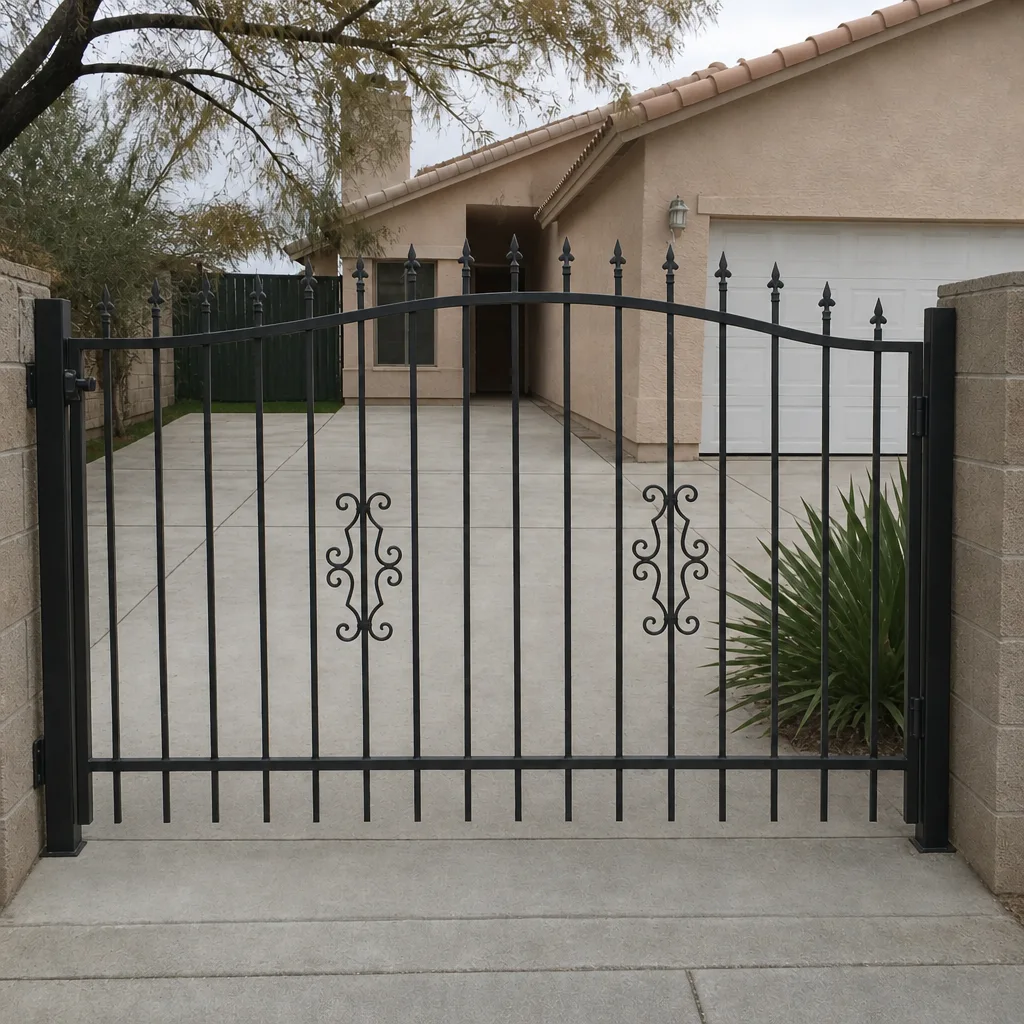
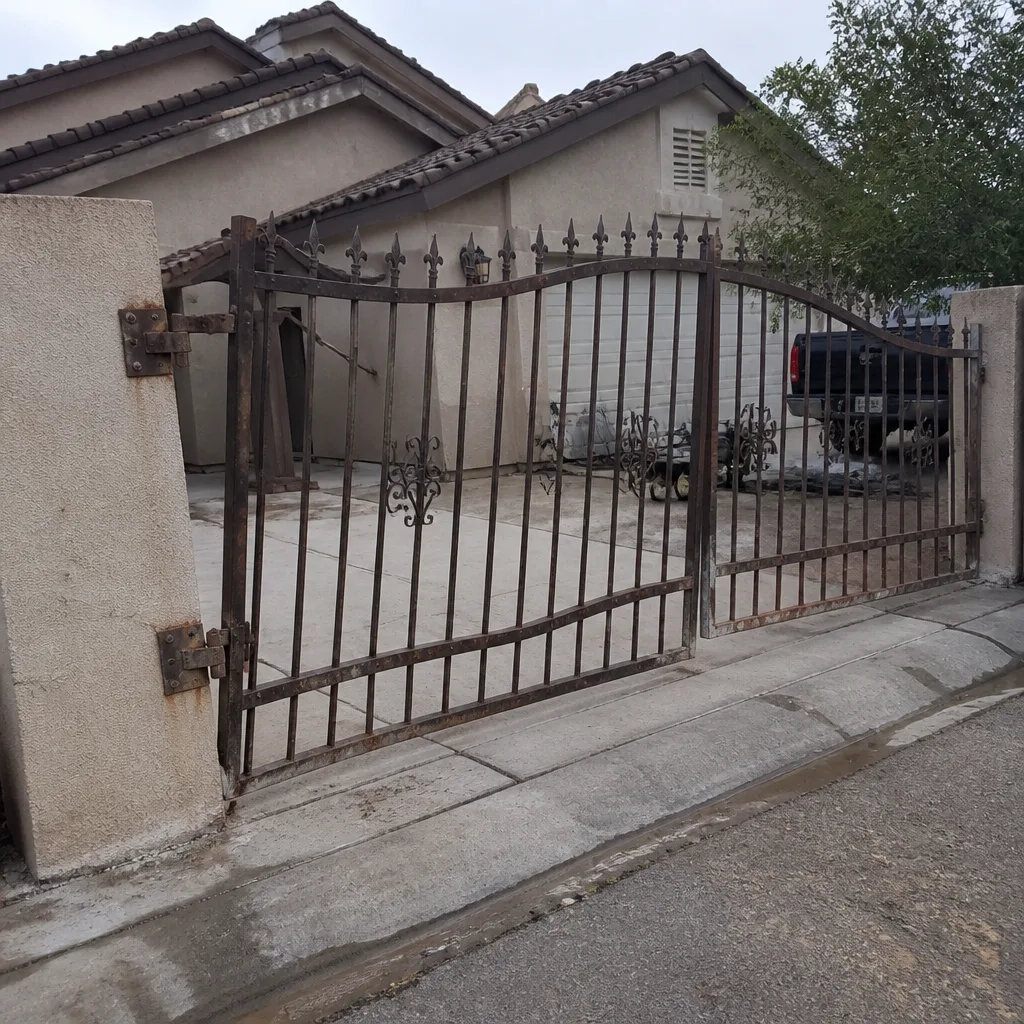
See the difference
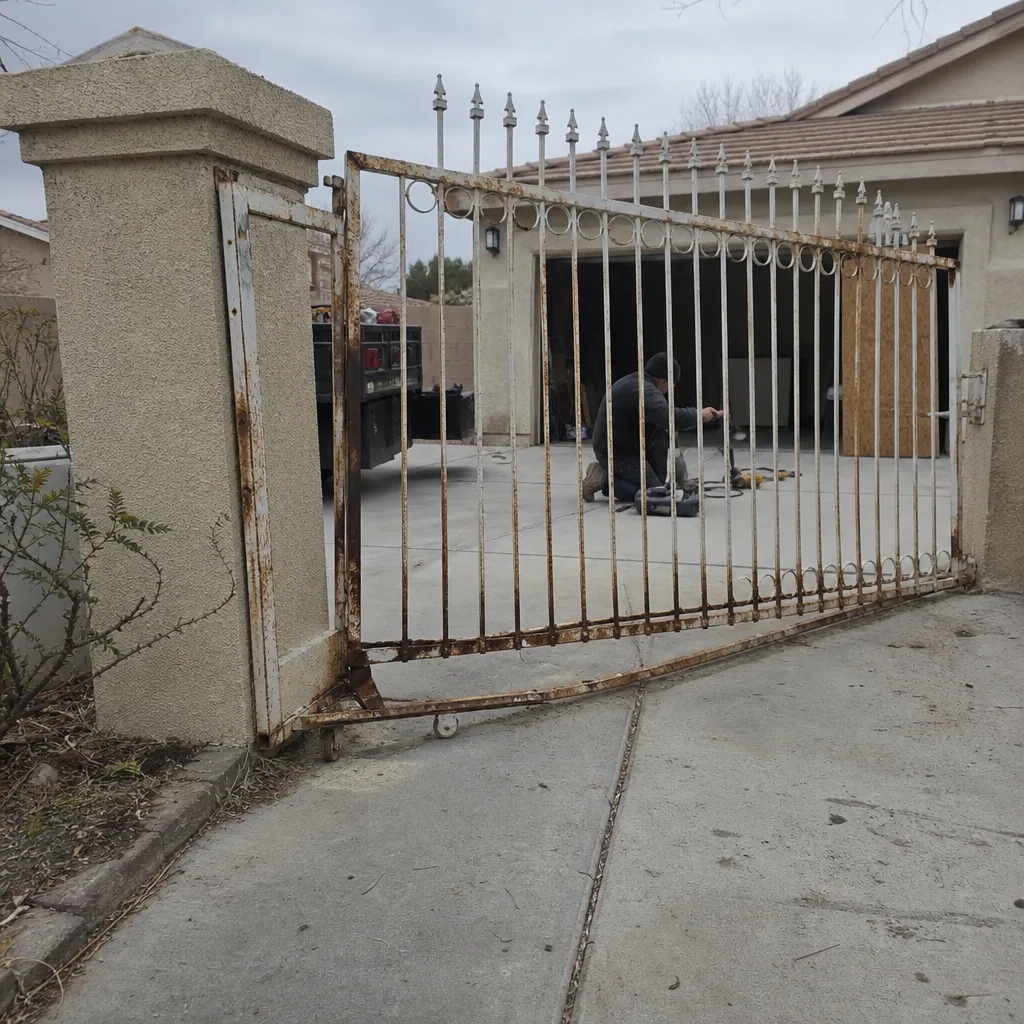 Before
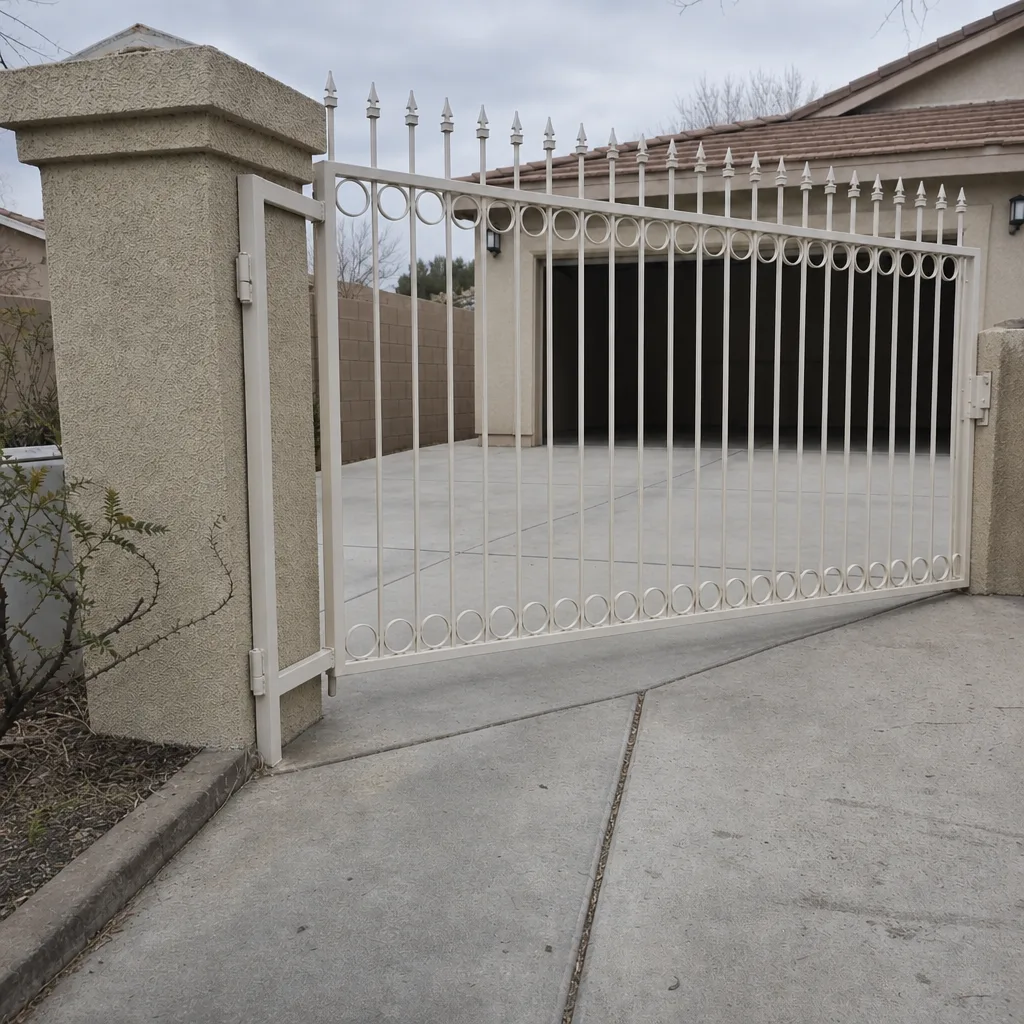 After
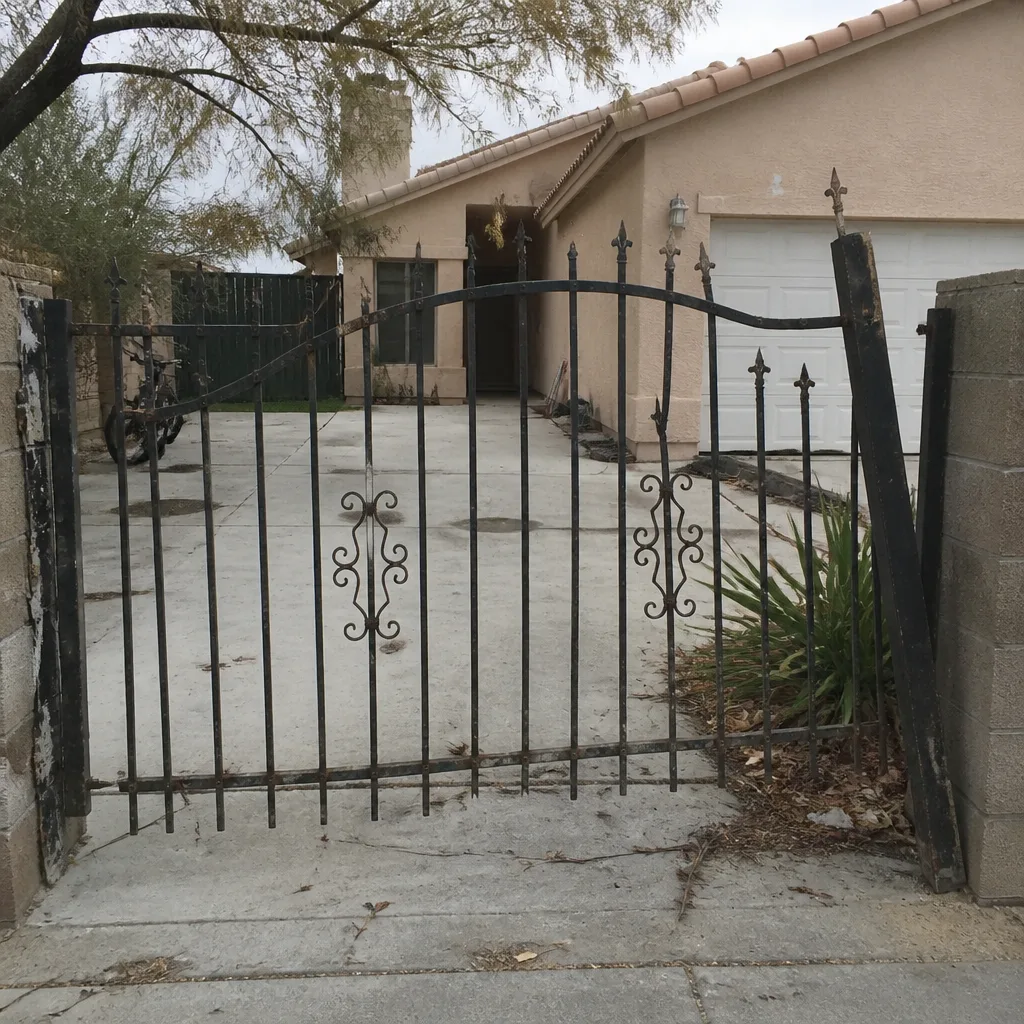 Before
 After
 Before
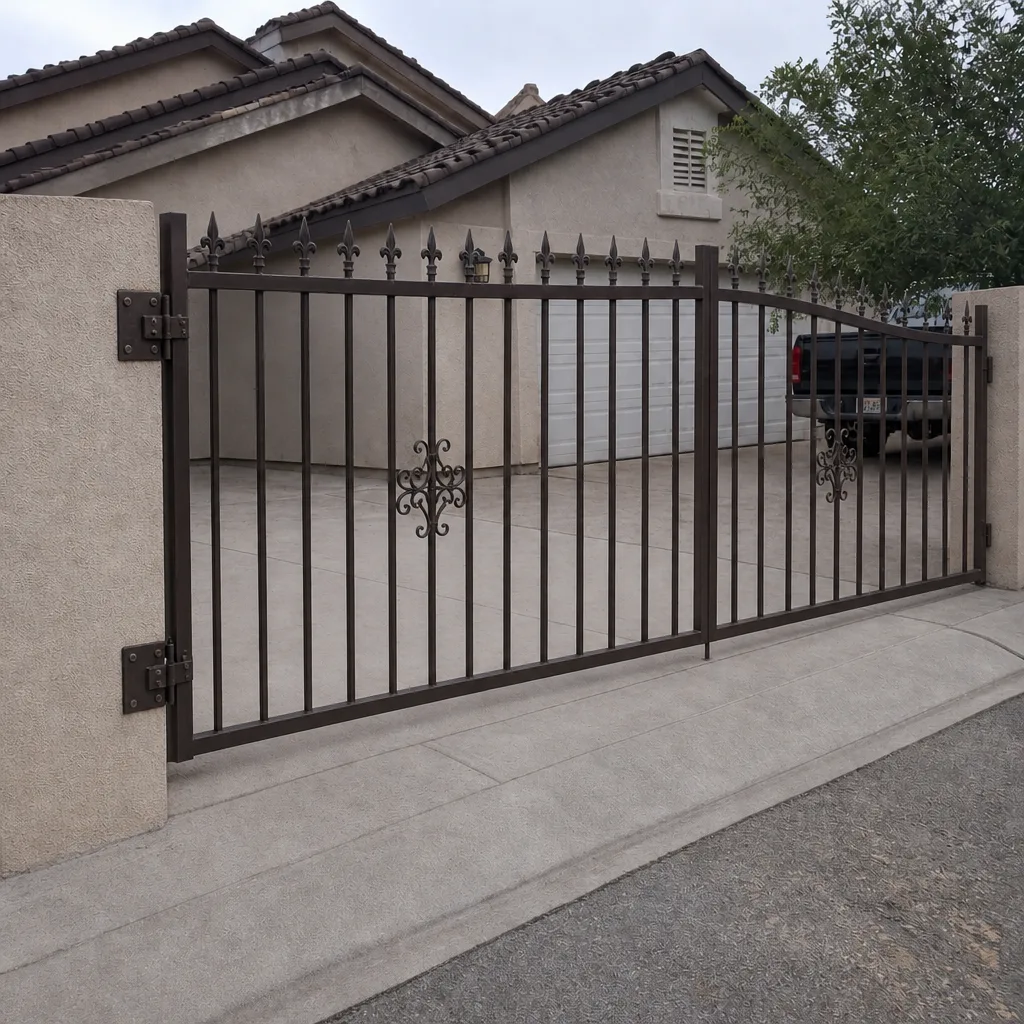 After
When to Call a Professional
Some gate problems are simple – a remote battery, a tripped breaker – and it’s reasonable to check those first. But once you’ve ruled out the obvious, or if the problem involves electrical wiring, high-voltage power to the operator, heavy panel movement, or a slide gate that’s come off its track, it’s time to call a technician. High voltage or damaged wiring to a gate operator should never be handled by anyone without electrical training. Gate panels are heavy and moving panels can crush. A slide gate off its track can fall. These are the situations where a trained professional should be the one on-site.
Gate Repair Centennial Hills offers free estimates in Centennial Hills. Our technicians are equipped to service LiftMaster, FAAC, BFT, Linear, Viking, Ghost Controls, DoorKing, Elite, and Mighty Mule systems. If you’re not sure what you have installed, we’ll identify it on-site. Call (877) 745-4728. We answer 24/7. Fast dispatch from 7am to 7pm, Sunday through Friday.
Frequently Asked Questions
The cost depends on the specific failure – a control board replacement is a different job from a full motor swap, and an access control repair is different again. The written estimate we provide after an on-site evaluation is what sets the price, so there’s no way to give a meaningful range without knowing the fault. Estimates are free. Call (877) 745-4728 and we’ll get an evaluation on the calendar.
Same-day repair is often possible. We answer 24/7. A call outside dispatch hours is booked into the next opening, Sunday through Friday, 7am to 7pm. The dispatch window runs 7am to 7pm, Sunday through Friday. The fastest way to get scheduled is to call (877) 745-4728.
We work on LiftMaster, FAAC, BFT, Linear, Viking, Ghost Controls, DoorKing, Elite, and Mighty Mule systems. If you’re not sure which brand is installed on your gate, a technician can identify it on-site and pull up the right parts and service information for that specific unit.
Random openings almost always trace back to an access board, receiver, or firmware issue rather than the motor. A stuck relay on the control board, a failing receiver, or stale firmware sending phantom commands are the usual culprits. A poorly wired safety edge or a stray signal from a neighboring remote can also cause it. The right first step is a control board and access control check rather than a motor replacement.
If the gate panel, posts, and framing are structurally sound and the fault traces to one replaceable component, repair is usually the better choice. If multiple subsystems have failed at once or the operator is obsolete and hard to source parts for, replacement tends to make more sense. A written estimate gives you the numbers to make the comparison yourself. Call (877) 745-4728 for a free on-site evaluation.
For a like-for-like repair – a motor swap, a board replacement, a hinge repair – most HOAs don’t require approval, though a few want notification. For a full replacement or a change in gate appearance or hardware style, HOA architectural review is more likely to apply. Check your governing documents before scheduling so the work doesn’t have to be redone.
The Bottom Line
Most gate failures in Centennial Hills trace to three things: heat stress on the motor and control board, alkaline soil corrosion on buried hardware, or stale firmware on the access control system. Identifying which one you’re dealing with before anyone touches the gate is what separates a real repair from a temporary fix. Being brand-fluent on the equipment matters too – DoorKing, Linear, Viking, Ghost Controls, and the other major operators each have their own failure patterns, and diagnostics change accordingly. And when HOA rules or structural compromise push you toward replacement, the cost-to-value framework above helps you make that call without guesswork. Gate repair is a job that rewards accurate diagnosis over quick part swaps.
If your gate is acting up and you’re not sure where to start, call Gate Repair Centennial Hills at (877) 745-4728 for a free estimate. We answer 24/7. Fast dispatch from 7am to 7pm, Sunday through Friday. Our technicians have up to 9 years of experience servicing gates from the motor to the keypad, and we work on the system you already have before we recommend replacing it. For the full range of what we do, see Gate Repair Centennial Hills, our gate installation services, and our gate motor & opener work. We’re a gate-only specialist, which means what you get is diagnostics and repairs specific to automated gates, not general handyman work.
Written by the team at Gate Repair Centennial Hills.