
Last updated November 24, 2026
 Wrought iron
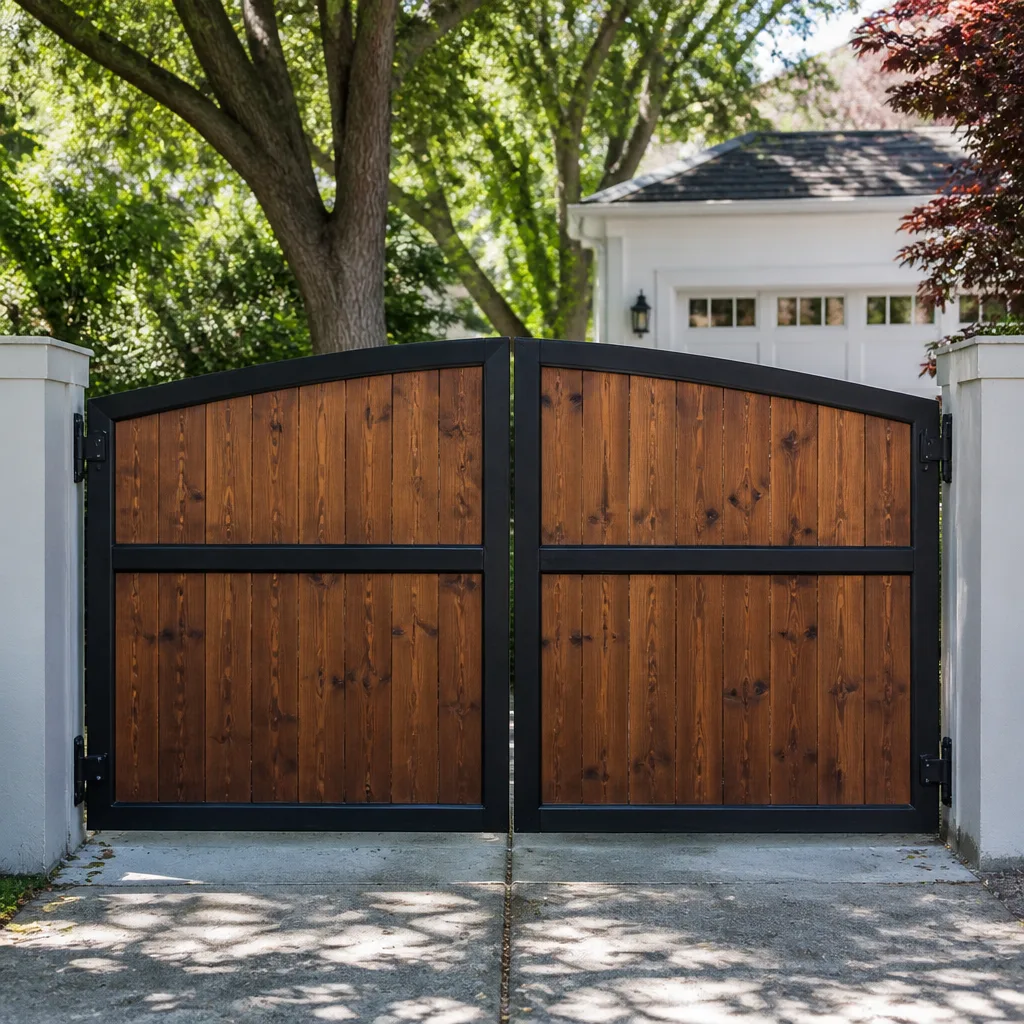 Wood & steel frame
 Farm & ranch
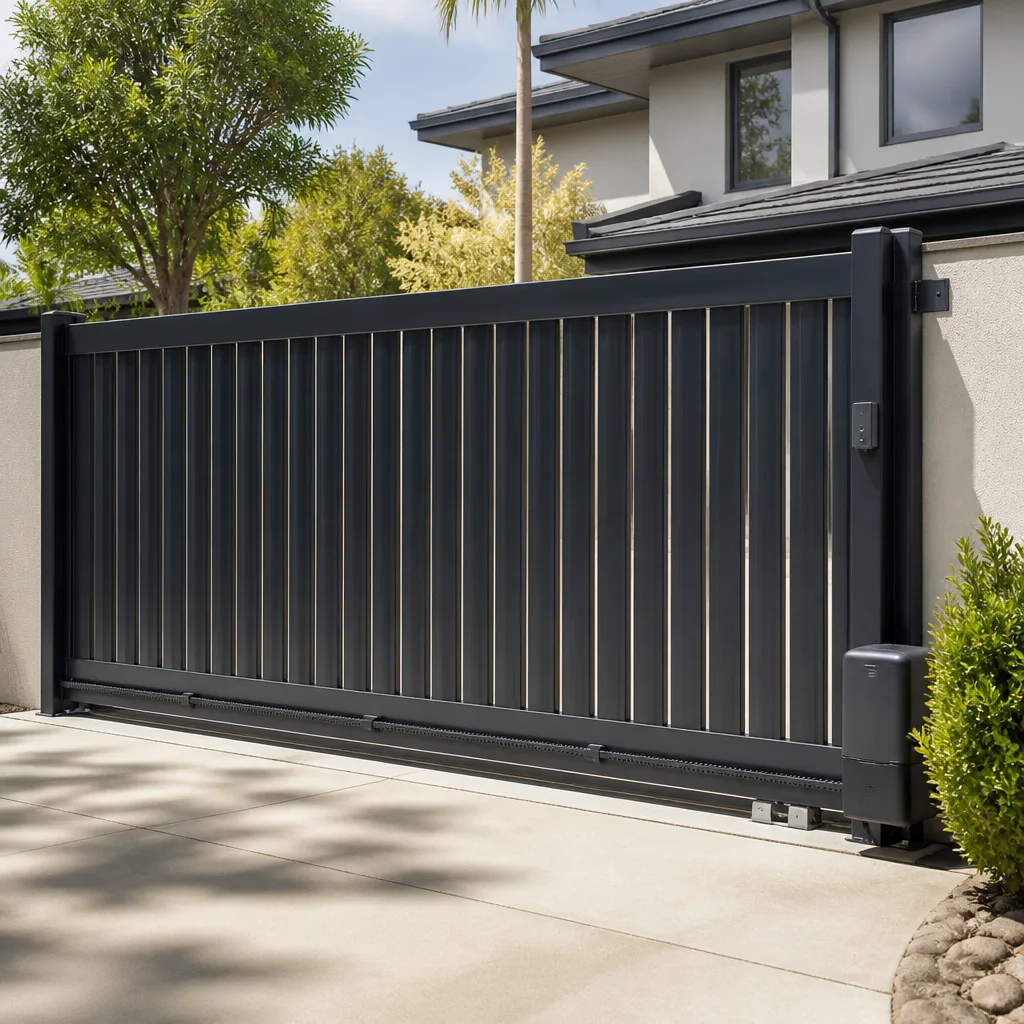 Sliding driveway gates
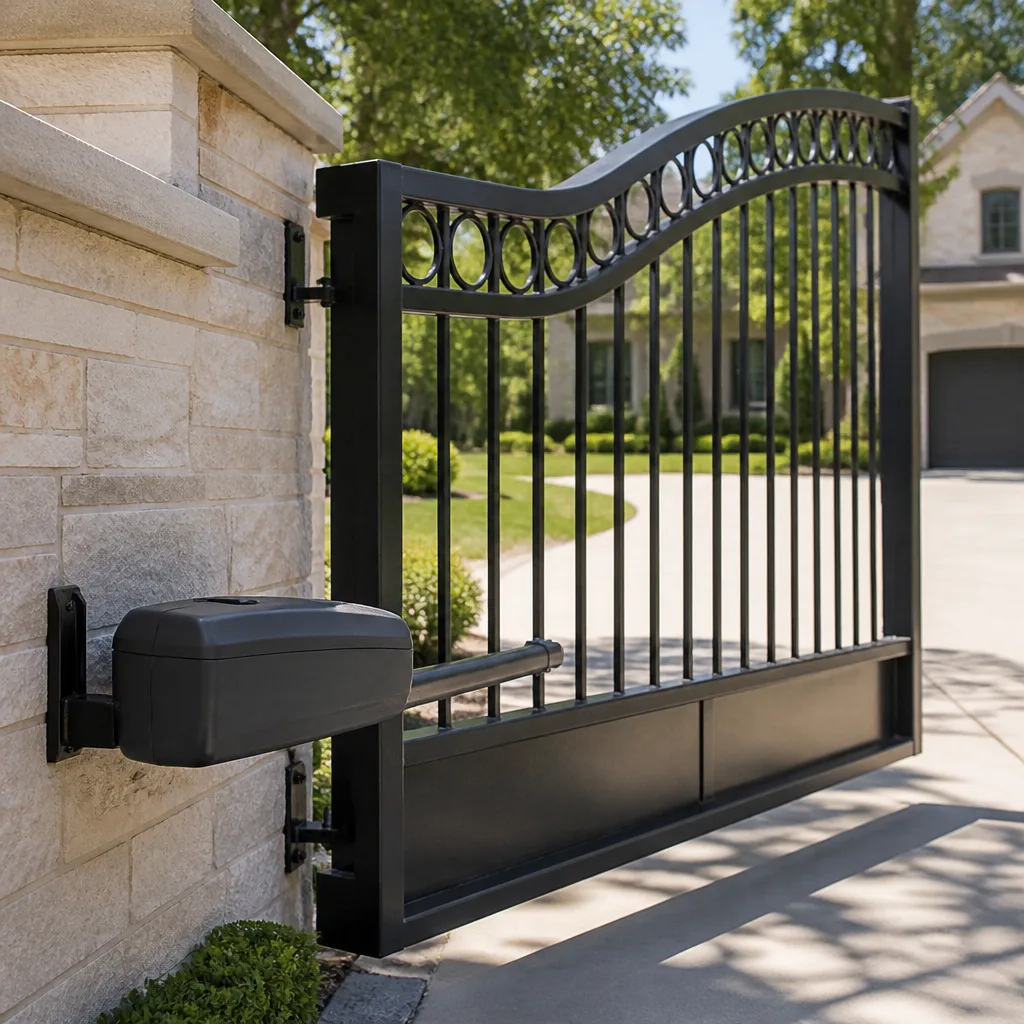 LiftMaster operators
Free on-site gate assessment - hinges, posts, and your LiftMaster or Nice gate operator checked before anything is quoted
The assessment is free and the quote is the invoice.
Get your free estimateSeasonal Gate Repair Care for Centennial Hills: Year-Round Homeowner’s Guide
Most gate care advice assumes four equal seasons. Centennial Hills doesn’t work that way. What we actually get is a long, punishing summer, two mild shoulder stretches where real damage hides, and a short winter that quietly drains your battery backup and thickens your hydraulic fluid. Treat the calendar as a maintenance schedule and your gate lasts. Ignore it and you’ll meet the same failures every year at the same time. This guide walks through what each phase of the year does to your operator, your access control, and your gate hardware, and what to check before the next season lands.
Quick Answer
Seasonal gate maintenance in Centennial Hills means prepping the operator for extreme heat in April and May, monitoring it through summer heat events, inspecting for hidden post-summer damage in fall, and recalibrating batteries and photo-eyes in winter. The single most important habit is checking your gate after each big temperature swing, because heat and low sun angles cause most of the failures we diagnose. Call (877) 745-4728 for a free estimate if your gate is already acting up.
Styles & brands we work with
- Wrought iron
- Wood & steel frame
- Farm & ranch
- Sliding driveway gates
- LiftMaster operators
Table of Contents
- Why Centennial Hills Seasons Hit Gates Differently
- Pre-Summer Prep: April and May
- Summer Survival: June Through September
- Fall Transition: What Summer Broke Shows Up in October
- Winter Specifics: December Through February
- Dust Storm Aftermath: The Post-Haboob Inspection
- Brand Notes: BFT, Linear, Viking and Ghost Controls
- The Full-Year Maintenance Schedule
Why Centennial Hills Seasons Hit Gates Differently
Automated gates are built to survive weather, but the kind of weather matters. Centennial Hills sits in the Las Vegas Valley, which means heat that holds its grip for months rather than spiking for a week. A gate motor that runs fine in a mild climate can spend June through September fighting thermal limits every afternoon. That sustained heat load is what makes seasonal care here different from seasonal care almost anywhere else.
Three things happen at once during the worst stretch. The motor overheats and trips its thermal cutout. The control board, often mounted in a metal box baking in direct sun, loses reliability. And the backup battery, if your operator has one, holds less charge in the heat. A gate can look healthy in the morning and refuse to close by 3pm, and it isn’t broken. It’s exhausted.
The shoulder seasons are the opposite problem. October through November and March through April feel pleasant, and that’s exactly when a gate that struggled all summer gives out. Components degraded by heat don’t fail under stress. They fail once the stress lets up and the parts have to move freely again. Fall is when we diagnose the most hidden damage in Centennial Hills, not summer.
Winter is short here but not harmless. Cold nights drop battery capacity further, and if your operator runs on hydraulic fluid rather than a direct-drive motor, viscosity changes affect how hard it has to work. Then there’s the low sun angle across the valley, which throws glare directly into photo-eyes and causes gates to reverse for no obvious reason.
- Summer stress period: heat, thermal cutouts, battery drain, board failures
- Shoulder seasons: pleasant weather that reveals damage from the previous phase
- Short winter: battery recalibration, hydraulic fluid checks, photo-eye alignment
- Year-round wildcard: dust storms that coat moving parts and blind sensors
Pre-Summer Prep: April and May
April and May are your window to prepare the gate for the months that will test it hardest. Doing this work now costs far less than repairing heat damage in August. It’s also the phase most homeowners skip, because the gate still feels fine.
Start with motor ventilation. The operator housing needs clear airflow. It’s easy for dust, spider nests, and dried debris to clog the vents over a winter or two, and once they’re blocked the motor has no way to shed heat. Clear any obstruction and inspect the housing for cracks or missing covers. If your control box sits in full afternoon sun, a shade or enclosure can make a real difference to board life. We’ve seen control boxes on the west side of a wall run noticeably hotter than the same box on the north side.
Then test the thermal cutout. This is a protection feature: the operator shuts itself down when the motor exceeds a temperature threshold. It should work. But you want to know it works before you depend on it. Part of our full electrical and mechanical checklist is confirming the cutout trips and resets correctly.
Lubrication is next, and this is where the season matters. Standard lubricants thin out in extreme heat and can lose effectiveness. A high-temperature formula holds up better on hinges, pivot points, and the chain or drive mechanism. Ask your technician which lubricant suits your hardware; the wrong one attracts dust and creates a paste that wears parts faster.
If you’re having a gate installed or a motor replaced before summer, plan for it to be measured and scheduled, not rushed. Our gate installation work is booked around the measurements and parts your property needs, and the estimate is agreed before any work starts.
Summer Survival: June Through September
Summer in Centennial Hills doesn’t just stress a gate. It stress-tests every component at the same time. During this stretch, your job shifts from maintenance to monitoring. You’re not trying to improve anything. You’re catching problems early.
The single most useful thing you can do is watch your gate cycle. Time how long a full open or close takes when the operator is cool, say in the early morning. Then time it again on a hot afternoon. A slowdown is your thermal load indicator. It tells you the motor is working harder than it should, whether because of heat, friction, or a voltage issue. If the afternoon cycle is consistently slower, that’s your signal to have the operator checked before it fails completely.
After each heat event over 108°F, run this check:
- Cycle the gate twice and note whether it moves at normal speed or lags.
- Check whether the operator has tripped its thermal cutout and refuses to respond.
- Look at the control board housing for heat discoloration or a hot smell.
- Test the safety reverse by walking into the photo-eye beam.
- Confirm the battery backup, if present, is holding. A gate that fails during a brief outage points to a weakened battery.
- Clear any debris or dust from vents and moving parts.
If a gate stops responding and the operator is hot to the touch, don’t keep cycling it trying to make it work. Let it cool and leave the diagnostics to a technician. Repeatedly forcing a hot motor can cause permanent damage to the drive and to the control board. This is one of the situations where brand knowledge saves money: knowing how a BFT or Linear board behaves under a thermal fault tells a technician quickly whether they’re looking at a cutout, a board failure, or a battery problem.
For automated gate failures in the middle of a heat wave, our gate repair service is the place to start, and same-day appointments are often possible when the schedule allows.
Fall Transition: What Summer Broke Shows Up in October
October and November are the honest months. Heat damage that stayed hidden through the summer tends to surface once temperatures drop, because components that were expanded and heat-stressed now have to work in mild conditions. A gate that “almost worked” all summer stops working in fall.
The fall inspection should focus on the parts summer wears hardest:
- Motor windings and drive: look for overheating evidence, unusual motor noise, or a smell of hot electronics.
- Control board: check for discoloration, loose connections, and moisture in the enclosure.
- Battery backup: capacity may have dropped quietly through summer. Test the operator’s ability to run on battery.
- Moving parts: hinges, rollers, and pivots that ran dry or collected dust all summer need fresh lubrication for the cooler months.
- Access control: keypads, intercoms, and entry systems should be tested now, before the low winter sun adds glare problems.
Fall is also the smart time for a gate motor or opener service if your operator has been struggling. Repairing a motor in October is far cheaper than replacing it after a cold-weather failure in January. If your system has reached the end of its life, our gate motor & opener service covers replacement and programming, and we’ll diagnose the existing equipment before recommending anything new.
One thing we stress to every homeowner: don’t assume that a slow, noisy gate at the end of summer is just “how it is now.” That’s the tell for degraded components, and fall is the window to address it before winter makes it worse.
Winter Specifics: December Through February
Winter in the Las Vegas Valley is mild compared to most of the country, but it’s not without gate problems. This is when battery capacity and hydraulic fluid matter most, and when photo-eye alignment gets temperamental because of the low sun angle.
Battery Capacity Recalibration
Backup batteries don’t fail outright. They weaken. Heat degrades them over summer, and cold nights in winter finish the job by reducing their available capacity further. If your gate relies on a battery backup, winter is the time to calibrate your expectation of what that battery can do. Test it: trip the power, and see how many cycles the gate completes. If it drops off quickly, the battery likely needs replacing. A gate that worked fine on backup last winter may not this winter, even if the battery is technically still holding a charge.
Hydraulic Operator Fluid Checks
Hydraulic gate operators, rather than direct-drive motors, use fluid to move the gate. In cold weather that fluid thickens, and the motor has to push harder to create the same motion. If your gate runs on hydraulics, check fluid levels and look for leaks, especially around seals and fittings. A slow seep over months becomes a bigger repair. Your technician can assess the fluid condition and top or replace it as needed. This is one of the checks we include when we work on a system like a Viking or a Linear hydraulic arm.
Photo-Eye Alignment and the Low Sun Angle
Photo-eyes send a beam across the gate opening to detect obstacles and reverse the gate. When the sun sits low in the winter sky, it can shine straight into a receiver and blind it. The gate reverses for no apparent reason, or stops mid-travel. This isn’t a fault in the sensor; it’s alignment and glare. A small adjustment to the angle of the photo-eye, or moving it slightly out of the direct path of the sun, often solves it. This is a frequent winter complaint in Centennial Hills, and it’s usually easier to fix than homeowners expect.
If your access control keypad or intercom is exposed to weather, inspect the connections during winter too. Our access-control work is part of the same visit, so a photo-eye adjustment can be combined with a keypad check.
Dust Storm Aftermath: The Post-Haboob Inspection
Dust storms are part of living in the valley, and they leave a specific mess behind. A haboob coats everything with fine dust that gets into places it doesn’t belong. For gate owners, that means sensors, vents, and moving parts all need attention in a specific order.
Here’s the sequence we recommend after any significant dust event:
- Photo-eyes first. Clean the lenses of both the transmitter and the receiver. Dust on the lens is the most common cause of a gate that won’t reverse or won’t close.
- Ventilation screens. Brush dust off the operator’s vents and screens. Clogged vents cause the motor to overheat, which is the last thing you want in warm weather.
- Moving pivot points. Dust mixes with lubricant to form a paste that wears hinges and rollers. Wipe down and re-lubricate according to your technician’s recommendation.
- Control box seals. Check that dust hasn’t forced its way into the control enclosure. Seals can weaken over time.
- Access control keypads and readers. Clean the surfaces and check that buttons and readers still respond reliably.
If you leave the dust in place, you’re creating wear and heat problems that show up weeks later. A quick post-storm check pays for itself. If dust has gotten into the control board or the motor, call a technician rather than opening the enclosure yourself. High-voltage components carry real shock risk even when the operator is off.
Brand Notes: BFT, Linear, Viking and Ghost Controls
Different brands have different quirks when the seasons change. Knowing those quirks is the difference between a quick fix and a replacement. We work on each brand individually rather than treating every gate the same way.
BFT
BFT operators are common on residential driveways, and their control boards are sensitive to heat and to dust in the enclosure. If a BFT system is tripping or behaving erratically after a summer or a dust event, board condition and ventilation are the first places a technician looks. BFT systems are usually straightforward to diagnose once you know the model.
Linear
Linear is often used in both residential and light commercial gates, and its hydraulic and electromechanical arms show the winter viscosity and lubrication issues we described earlier. Linear arms that run smoothly in mild weather can labor in cold, so fluid and lubrication checks are important going into winter.
Viking
Viking makes durable operators that still need fluid service on hydraulic models. In cold weather, a Viking hydraulic gate that’s slow to open is telling you the fluid needs attention, not that the motor is failing. That distinction is worth money.
Ghost Controls
Ghost Controls is popular on residential solar and battery setups, which makes winter battery recalibration especially important. A Ghost Controls gate that opens fine on a sunny day and stumbles on a cold one is often a battery issue rather than a motor issue. Testing battery performance in cold weather is part of what we check.
Because our focus is gate-only, and we work across these systems specifically, we can diagnose what you have before we recommend replacing it. That applies whether you need gate repair Centennial Hills homeowners trust or a full system check.
The Full-Year Maintenance Schedule
Here’s the calendar in one place. Stick to it and most seasonal failures stay small.
- April – May (Pre-summer): Clear vents and exhaust screens; test the thermal cutout; switch to high-temp lubricant; assess shade and enclosure for the control box; inspect hinges and pivots.
- June – September (Summer): Time the gate cycle each month; check for thermal cutouts after heat events over 108°F; watch for control board heat discoloration; test safety reverse; keep vents clear; test battery backup during any power blip.
- October – November (Fall): Inspect motor, control board, and moving parts for hidden summer damage; test battery; service the operator if it’s been struggling; verify access control works.
- December – February (Winter): Recalibrate backup battery; check hydraulic fluid levels and seals; realign photo-eyes for the low sun angle; check keypad and intercom connections.
- After any dust storm: Clean photo-eye lenses; clear vents; wipe and re-lubricate pivots; check control box seals; clean access control surfaces.
- Continuous: Watch for slowdowns, unusual noise, and unexplained reversals, and call a technician when something changes.
Treat this schedule as a starting point rather than a fixed calendar. Some homeowners in Centennial Hills need to check their gates more often in summer because their operator sits in full sun. Others with a shaded, newer system need fewer mid-season checks. If you’d like a schedule tailored to your gate, that starts with a free on-site estimate.
Common Mistakes to Avoid
- Assuming “it works fine today” means it’s ready for summer. A gate that cycles normally in April may still be carrying blocked vents or worn lubricant into the heat. Test the components, don’t just watch the gate move.
- Forcing a hot operator to keep cycling. When a motor trips its thermal cutout, it’s protecting itself. Repeatedly trying to force it to run can cause permanent damage to the drive or the control board.
- Opening the control enclosure yourself. Gate operators carry high voltage. Even a powered-off unit can hold charge. Leave board and wiring work to a trained technician.
- Using the wrong lubricant. A standard lubricant can thin in summer heat or attract dust that grinds moving parts. Use only the lubricant your technician recommends for your hardware.
- Ignoring a slow gate after a heat wave. A slowdown is an early warning, not a new normal. Treat it as a signal to have the operator checked before fall.
- Skipping the battery test. Batteries degrade quietly. A gate that works on mains power can still have a dead backup, and you won’t know until the power fails.
- Waiting for winter to fix winter problems. Replacing a failing motor in October is cheaper than scrambling in January. Spring and fall are the windows, not the last resort.
See the difference
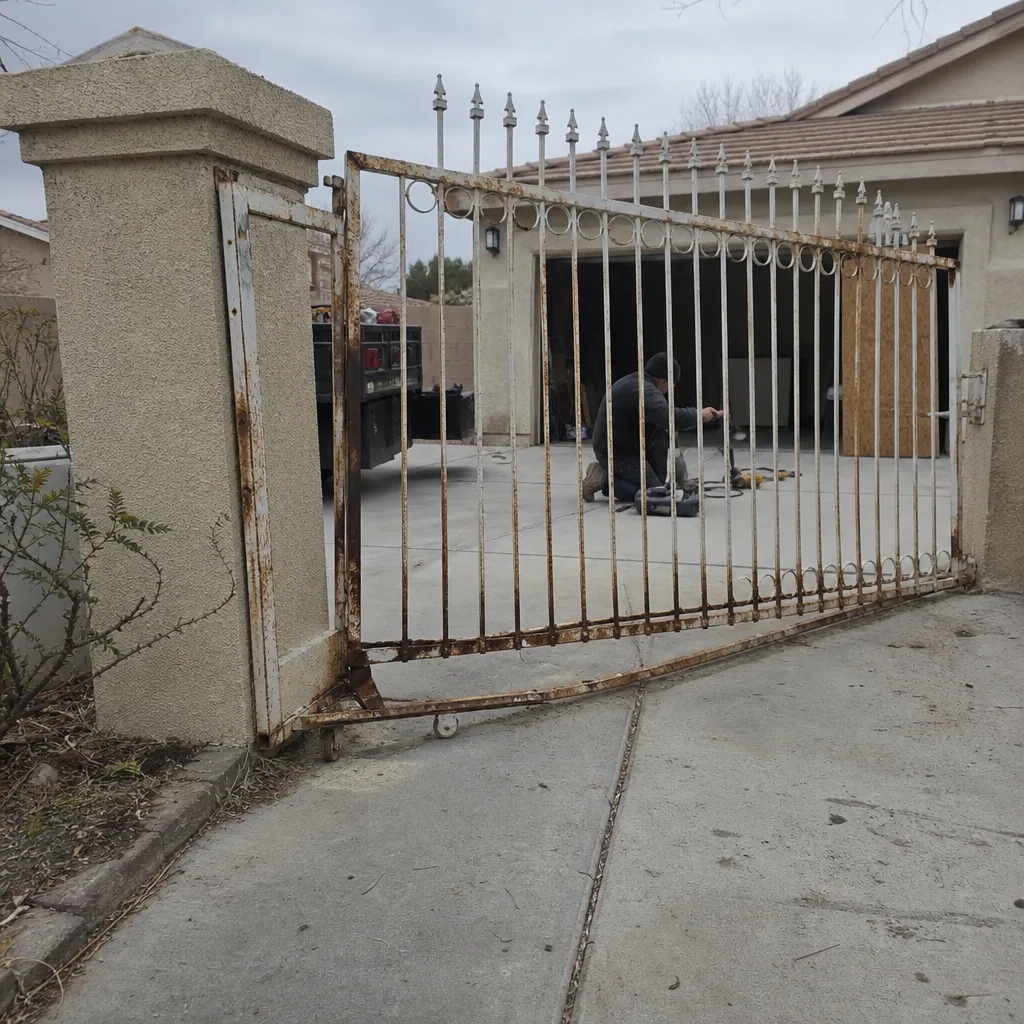 Before
 After
 Before
 After
 Before
 After
When to Call a Professional
Call a technician when a gate stops responding entirely, when it reverses for no reason, when the motor runs hot or trips repeatedly, or when you see or smell heat damage. Call if the operator is slow after a heat wave, if the battery backup won’t hold, or if you notice grinding, clicking, or unusual noise from the motor. Call after any dust storm if cleaning the photo-eyes doesn’t restore normal operation, and call before winter if your hydraulic operator is sluggish. Gate Repair Centennial Hills offers free estimates in Centennial Hills – call (877) 745-4728. We answer 24/7. Fast dispatch from 7am to 7pm, Sunday through Friday. Our technicians have up to 9 years of experience and work through the full electrical and mechanical stack, from the motor to the keypad.
Frequently Asked Questions
Pre-summer preparation in April and May is the most important, because it prevents the failures that summer heat causes. Clear the vents, test the thermal cutout, switch to high-temperature lubricant, and assess shade for your control box. Then watch your gate cycle through summer so you catch slowdowns early. Call (877) 745-4728 for a free estimate if you’d like a technician to handle the prep.
The low winter sun angle in the Las Vegas Valley often blinds the photo-eyes, causing the gate to reverse for no obvious reason. The fix is usually a small alignment adjustment to move the sensor out of the direct path of the sun. It’s not a sensor failure. Call (877) 745-4728 and we can check the alignment as part of a free estimate.
Test it in fall and again in winter, and check it after any power blip during summer. Heat degrades battery capacity over the summer months, and cold nights reduce it further. If the gate only completes a couple of cycles on backup, the battery likely needs replacing. Call (877) 745-4728 to have it checked.
Clean the photo-eye lenses first, clear the operator’s vents and screens, wipe and re-lubricate the moving pivot points, check the control box seals, and clean your access control keypad. If the gate still won’t operate correctly after cleaning, call a technician rather than opening the control enclosure. Call (877) 745-4728 for a free estimate.
Repair is often the right call if the motor is sound and the problem is heat-related. We diagnose the existing equipment on its own brand – BFT, Linear, Viking, Ghost Controls and others – before recommending replacement. A free estimate tells you which option makes sense. Call (877) 745-4728.
Yes, and the damage often hides until fall. Sustained heat causes thermal cutouts, control board failure, battery drain, and lubricant breakdown. The gate may look fine in October and fail once cooler weather tests it. Call (877) 745-4728 if your gate slowed down over the summer.
The Bottom Line
Centennial Hills doesn’t give your gate four equal seasons. It gives it a punishing summer, two shoulder seasons where hidden damage surfaces, and a short winter that tests your battery and your sensors. Prep in April and May, monitor through the heat, inspect in fall, and recalibrate in winter. Clear the dust after storms, watch for slowdowns, and don’t force a hot operator. These habits prevent most failures and make the ones that slip through cheaper to fix. If anything on this schedule feels like more than you want to handle, a free estimate from a gate-only specialist is the fastest way to a plan.
Whether your gate is struggling through a heat wave, reversing in the low winter sun, or overdue for its seasonal checkup, we’re ready to help. Call (877) 745-4728 for a free estimate. We answer 24/7. Fast dispatch from 7am to 7pm, Sunday through Friday. From the motor to the keypad, we repair what you have before we recommend replacing it.
Written by the team at Gate Repair Centennial Hills.